
Fall gutter and roof maintenance in Brandon, MS is an important part of protecting your home after months of Mississippi heat, humidity, thunderstorms, and heavy rainfall.
As autumn arrives, falling leaves, pine needles, and small branches can collect along roof edges, inside gutters, and around downspout openings. When that debris restricts drainage, rainwater may overflow and create moisture problems around fascia boards, siding, and the foundation.
At the same time, hidden roofing weaknesses from summer storms may remain unnoticed until another period of heavy rain.
For Brandon homeowners, the challenge is knowing whether a problem involves routine gutter maintenance, damaged shingles, deteriorating flashing, or an actual roof leak.
Fortunately, not every gutter overflow or ceiling stain means your roof needs replacement. The first step is identifying where water is going, why it is collecting, and whether roofing materials are allowing moisture into the structure.
In this guide, Pro-Shield Roofing & Construction explains how falling leaves affect roof drainage, which warning signs deserve attention, and what homeowners can do before the next round of Mississippi rain.
Can Falling Leaves and Clogged Gutters Cause Roof Leaks?
Falling leaves do not automatically cause a roof leak. However, heavy debris accumulation can block gutters, restrict roof drainage, and hold moisture near vulnerable roofing areas.
If shingles, flashing, or other roof components are already damaged, drainage problems may increase the opportunity for water to enter those weaknesses.
Brandon homeowners should watch for:
- Gutters overflowing during rainfall
- Leaves collecting around downspout openings
- Standing water inside gutters
- Sagging or detached gutter sections
- Wet debris trapped in roof valleys
- Water stains along fascia boards
- Damp soffits or exterior siding
- Missing or lifted shingles
- Loose flashing around roof penetrations
- Ceiling stains or recurring attic moisture
The most important distinction is that a clogged gutter and a leaking roof are not always the same problem.
A professional roofing inspection can help determine whether a property needs gutter maintenance, localized roof repairs, or additional investigation.
Why Fall Roof and Gutter Maintenance Matters in Brandon, Mississippi
Brandon homes experience a combination of seasonal weather conditions that can influence roofing and drainage systems.
Long periods of summer heat, strong thunderstorms, heavy rain, and wind can affect shingles, gutters, flashing, and other exterior components.
Autumn brings additional debris from trees, particularly on properties surrounded by mature oaks, pines, and other established landscaping.
While Brandon generally does not experience the prolonged snow and ice conditions common in northern states, rainfall and drainage remain important concerns throughout the cooler months.
What Makes Fall a Useful Time for Maintenance?
Summer storm effects may still be present.
Strong winds and flying debris can leave damaged shingles or loosen gutter attachments.
Leaf accumulation becomes more noticeable.
Wet leaves and small branches may restrict drainage in gutters and roof valleys.
Rainfall can expose hidden problems.
Water stains, overflowing gutters, and recurring moisture may reveal areas requiring closer evaluation.
Homeowners can address issues before additional storms.
Routine maintenance and timely repairs help keep drainage systems working as intended.
The Mississippi State University Extension Service recommends clearing leaves and debris from gutters so rainwater can drain freely.
A fall maintenance routine should focus on actual warning signs rather than assuming every roof needs major work.
1. How Falling Leaves Can Affect Your Roof and Gutters
Leaves are a normal part of the fall season, but large amounts of wet debris can interfere with roof drainage.
As rainfall moves across the roof, leaves may collect in gutters, at downspout openings, and inside roof valleys.
Smaller materials, including pine needles, twigs, and roofing granules, can collect underneath those leaves.
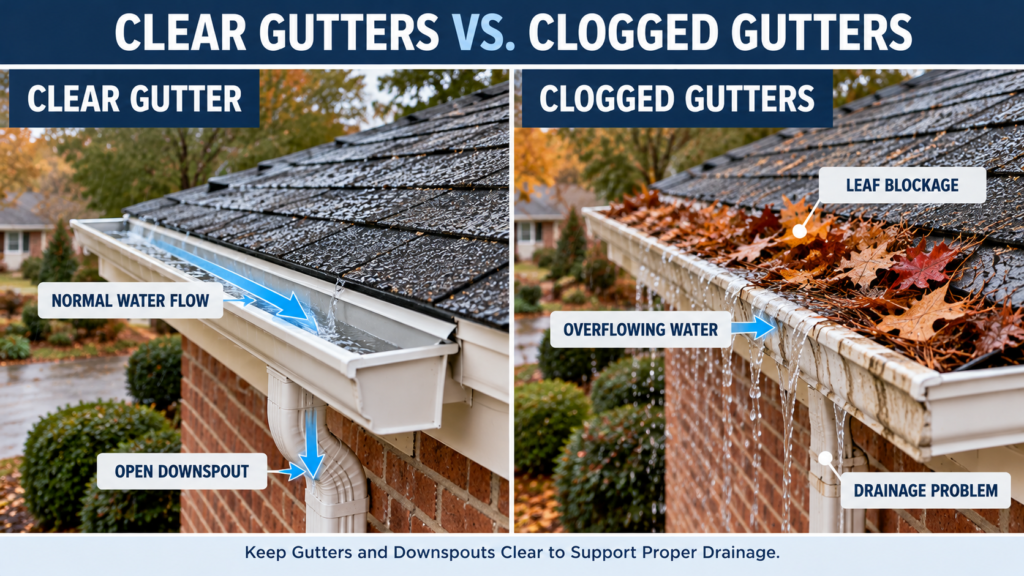
What Happens When Gutters Become Blocked?
Water cannot drain normally.
Leaves and debris can restrict water flow toward downspouts.
Rainwater begins to overflow.
When gutters fill faster than water can drain, water may spill over the edges.
Moisture reaches nearby building materials.
Overflow may repeatedly wet fascia boards, siding, trim, or areas near the foundation.
Gutter attachments experience additional stress.
Debris and trapped water add weight, particularly when gutters are already loose or deteriorating.
Are a Few Leaves Something to Worry About?
Not necessarily.
A small amount of dry debris may not interfere with a functioning gutter system.
The concern is repeated accumulation that restricts flow, holds moisture, or prevents downspouts from draining.
For Brandon homes under large trees, the right cleaning schedule depends on the actual amount of debris rather than a fixed rule for every property.
2. Warning Signs Your Gutters Are Not Draining Properly
Gutter problems are often easier to recognize during or shortly after rainfall.
Rather than climbing a ladder, homeowners can begin by observing the system from a safe location on the ground.
Common Warning Signs
Water overflowing from gutter edges
During heavy rain, water may spill over sections that are blocked, undersized, damaged, or improperly sloped.
Plants or weeds growing in gutters
Vegetation may indicate that debris and moisture have remained inside the gutter for an extended period.
Sagging gutter sections
Loose brackets, deteriorated fascia, or accumulated weight may cause sections to pull away from the roof edge.
Slow or blocked downspouts
A gutter may appear clear while debris remains lodged farther down the drainage system.
Water collecting near the foundation
Downspouts that release water too close to the home may contribute to foundation-area moisture concerns.
Staining below the roof edge
Repeated overflow can leave visible marks on fascia, soffits, siding, or exterior walls.
Why Downspouts Matter as Much as Gutters
Gutters collect runoff from the roof, but downspouts are responsible for carrying that water away.
If a downspout is blocked or discharges toward the foundation, simply clearing the gutter channel may not solve the drainage issue.
The Clemson University Cooperative Extension’s water management guidance recommends checking gutters regularly and evaluating how runoff moves across a property.
For homeowners with damaged or failing systems, Pro-Shield offers gutter installation and replacement services.
3. Can Clogged Gutters Damage Fascia, Soffits, or Siding?
Yes, repeated gutter overflow may contribute to moisture-related deterioration around the roof edge.
The fascia is the board or finishing material along the edge of the roof where gutters are often attached.
Soffits are the surfaces underneath the roof overhang.
Both components can be exposed to repeated water contact when drainage is not working properly.
Signs of Potential Moisture Damage
- Peeling paint along fascia boards
- Dark or damp spots below gutters
- Soft or deteriorated wood
- Sagging gutter attachments
- Stained soffit panels
- Moisture marks on siding
- Water dripping behind the gutter instead of into it
However, these conditions do not always originate from a clog.
Improper gutter installation, missing drip-edge protection, roof-edge defects, and deteriorated exterior materials can create similar symptoms.
What Should Homeowners Do?
Start by determining whether the gutter is blocked, loose, improperly sloped, or damaged.
If the system continues leaking or overflowing after cleaning, additional inspection may be necessary.
Gutter replacement may be appropriate for badly deteriorated or repeatedly failing sections, while isolated attachment or drainage problems may be repairable.
4. Roof Valleys Can Hold Leaves and Hide Existing Damage
Roof valleys form where two roof slopes meet.
These areas collect runoff from adjoining roof sections, making proper drainage especially important.
Homes with multiple gables or intersecting rooflines may have several valleys where debris can accumulate.
Why Are Roof Valleys Vulnerable?
During fall, leaves and twigs can become trapped where roof surfaces intersect.
Wet debris may retain moisture and cover underlying shingles or metal flashing.
If roofing materials are already damaged, the debris can make problems harder to recognize.
Warning Signs to Watch For
- Leaves packed into roof valleys
- Small branches trapped against shingles
- Visible deterioration of valley flashing
- Wet areas that remain after surrounding sections dry
- Repeated moisture stains near roof intersections
- Debris accumulation following storms
A few scattered leaves generally do not mean that a roof leak is developing.
The concern is substantial or persistent buildup that interferes with runoff or conceals existing roofing defects.
Safety Tip: Avoid walking on wet roofing surfaces or trying to reach valleys from an unstable ladder. Hire a qualified professional when clearing debris requires roof access.
5. Roof Leaks Can Start Around Flashing, Vents, and Shingles
A clogged gutter is only one possible drainage concern.
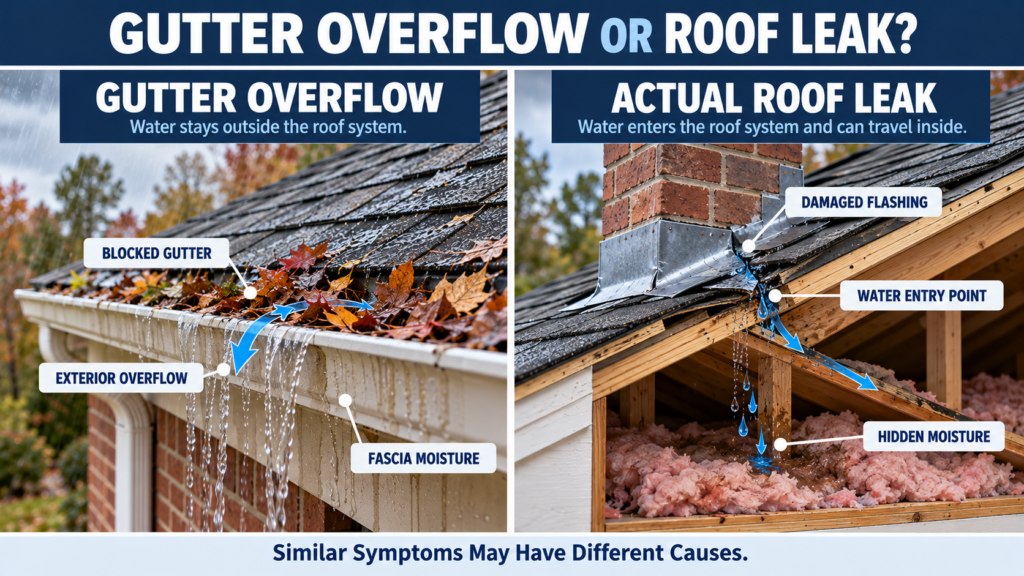
Actual roof leaks may develop when water enters through a damaged or improperly protected part of the roofing system.
Common Roof Leak Sources
Damaged asphalt shingles
Missing, lifted, or cracked shingles may expose underlying roofing layers to precipitation.
Chimney flashing
Loose metal or deteriorating connections around a chimney can provide opportunities for water entry.
Plumbing vent boots
Rubber seals around plumbing vent pipes may crack or separate as they age.
Roof-to-wall connections
Improperly protected intersections between roofing and vertical walls can allow rainwater into surrounding building materials.
Roof valleys
Damaged valley materials may create leaks even when leaves are not present.
Roofing fasteners or accessories
Improperly installed or deteriorated components can also create moisture-entry points.
Does a Roof Leak Always Appear Directly Below the Damage?
No.
Water may travel along decking, framing, or insulation before reaching a finished ceiling.
For example, a leak around chimney flashing may create a ceiling stain several feet away from the original entry point.
This is why identifying a leak source often requires inspection of more than one area.
Pro-Shield provides roofing services across Central Mississippi, including roof leak investigation, localized repairs, and replacement evaluations.
6. Interior Warning Signs of Hidden Roof Moisture
Sometimes homeowners notice interior moisture before they recognize a problem outside.
A roof leak can remain concealed within the attic or ceiling assembly before visible staining develops.
Signs Worth Investigating
Brown or yellow ceiling stains
Discoloration may indicate previous or recurring moisture exposure.
Peeling paint or bubbling drywall
Repeated moisture can damage finished interior surfaces.
Damp attic insulation
Wet insulation may indicate water intrusion, condensation, or another moisture source.
Musty odors
Persistent damp conditions can create odors, although an inspection is needed to identify the cause.
Water marks near roof penetrations
Staining around chimney walls, skylights, or vent openings may indicate a vulnerable building connection.
Does Every Ceiling Stain Mean You Have a Roof Leak?
No.
Ceiling stains may result from roofing defects, plumbing problems, HVAC condensation, or other moisture sources.
For example, some Mississippi homes have air-conditioning equipment or ductwork in attic spaces. Moisture associated with those systems can sometimes resemble a roof leak.
A proper investigation should consider these possibilities before roofing repairs are recommended.
The U.S. Environmental Protection Agency’s moisture and mold guidance emphasizes identifying moisture sources and drying affected materials promptly.
7. How Summer Storm Damage Can Affect Fall Roof Performance
Brandon homeowners may experience thunderstorms, wind, hail, and heavy rainfall during the warmer months.
Some storm-related roofing problems remain visible, while others require closer inspection.
Common Storm-Related Roofing Concerns
- Missing or lifted shingles
- Torn shingle edges
- Damaged ridge shingles
- Loose flashing
- Damaged roof vents
- Branches lodged against roofing materials
- Displaced gutters or downspouts
Why Can Problems Appear Later?
A roofing defect may not produce noticeable interior moisture during every rainfall event.
Wind direction, rainfall intensity, and the location of an opening can influence whether water enters.
Over time, repeated exposure may reveal a previously unnoticed weakness.
That does not mean every roof exposed to a storm requires repairs.
Homeowners should focus on actual evidence of damage and request a professional inspection when meaningful warning signs appear.
8. How Often Should Brandon Homeowners Clean Their Gutters?
There is no single cleaning schedule that works for every home.
A property with mature trees directly above the roof may collect debris more quickly than a home with limited tree coverage.
As a general starting point, homeowners can inspect gutters during spring and fall, with additional checks after significant leaf drop or storms.
Homes That May Need More Frequent Attention
- Houses with large oak trees nearby
- Properties surrounded by pines
- Roofs with multiple valleys
- Homes with repeated downspout blockages
- Properties with a history of gutter overflow
- Houses where branches extend above roof slopes
Are Gutter Guards Worth Considering?
Gutter guards may help reduce the entry of larger leaves and debris.
However, no gutter protection system eliminates the need for inspection or maintenance.
Pine needles, small twigs, roof granules, and other debris may still accumulate depending on the guard design.
A qualified gutter contractor can help determine whether a guard system makes sense for the property’s roof layout and tree coverage.
9. What Should Brandon Homeowners Do When They Notice a Leak or Overflow?
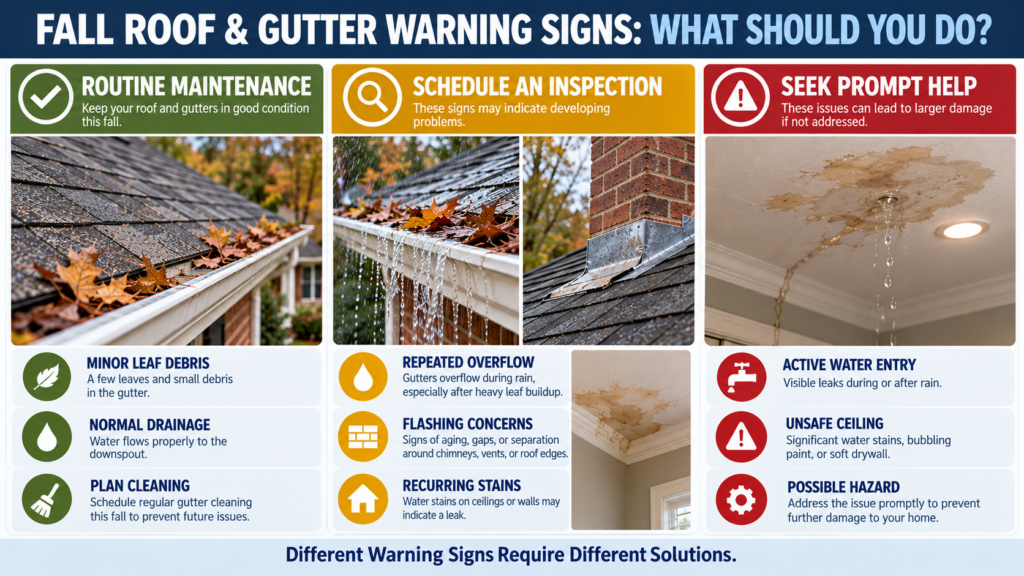
The correct next step depends on the warning sign.
Situation 1: Leaves Are Collecting, but Drainage Still Works
Recommended action: Monitor the accumulation and schedule routine gutter maintenance before a blockage develops.
Situation 2: Water Overflows During Heavy Rain
Recommended action: Check for gutter blockages, downspout restrictions, damaged sections, or inadequate drainage.
If the problem continues after cleaning, a professional gutter evaluation may be appropriate.
Situation 3: Ceiling Stains or Attic Moisture Appear
Recommended action: Document the moisture and arrange an inspection to identify whether the source is roofing, plumbing, condensation, or another issue.
Situation 4: Water Is Actively Entering the Home
Recommended action: Protect belongings where safe, keep clear of wet electrical fixtures, and seek prompt professional assistance.
Situation 5: Roof or Ceiling Structural Damage Is Suspected
Recommended action: Keep people away from the affected area and contact qualified emergency or structural professionals.
10. A Practical Fall Roof and Gutter Checklist for Brandon Homes
Homeowners can use this checklist before another period of heavy rainfall.
Roof Surface
- Look for missing or lifted shingles from the ground.
- Check for visible storm-related damage.
- Observe chimney and roof-to-wall flashing.
- Note branches or debris resting on the roof.
- Look for unusual wear around roof penetrations.
Gutters and Downspouts
- Check for heavy leaf accumulation.
- Observe whether gutters overflow during rainfall.
- Look for sagging or separated gutter sections.
- Check visible downspout outlets for debris.
- Make sure runoff is directed away from the home.
Roof Valleys and Roof Edges
- Look for wet debris trapped in valleys.
- Check for staining along fascia boards.
- Observe whether water is running behind gutters.
- Look for damaged soffits or exterior trim.
Interior and Attic
- Check ceilings for new or recurring stains.
- Look for unexplained attic moisture where safely accessible.
- Note peeling paint or damp drywall.
- Document when moisture appears after rainfall.
- Consider plumbing and HVAC moisture sources as well as roofing.
Professional Follow-Up
- Photograph visible concerns.
- Schedule cleaning when debris affects drainage.
- Arrange an inspection for recurring leaks or damaged roofing materials.
- Address confirmed active moisture entry.
- Review repair recommendations before considering replacement.
Safety Reminder: Avoid climbing onto wet or steep roofs. Elevated gutter cleaning and roofing repairs should be handled by qualified professionals.
11. When Does a Roof Need Repair Instead of Routine Maintenance?
Not every drainage concern requires roofing work.
Some problems can be resolved through gutter cleaning, downspout maintenance, or minor gutter repairs.
Other issues may require localized roof repairs.
When Routine Maintenance May Be Enough
- Gutters contain seasonal leaves but remain structurally sound.
- Downspouts need debris removal.
- Small amounts of roof debris need professional cleaning.
- The roof has no confirmed leaks or visible damage.
When Localized Roof Repair May Be Appropriate
- A limited number of shingles are damaged.
- A plumbing vent boot is deteriorated.
- Flashing has a localized defect.
- A specific roof leak source has been identified.
- The remaining roof system is in good condition.
When Roof Replacement May Be Worth Considering
- Shingle deterioration affects multiple roof slopes.
- Leaks continue despite appropriate repairs.
- The roof is approaching the end of its useful life.
- Damage is widespread.
- Underlying roof decking requires extensive work.
The goal is to make decisions based on an actual inspection rather than assuming every leak calls for a new roof.
Pro-Shield’s roofing services page explains its inspection, repair, and replacement options for Central Mississippi properties.
12. When Should You Schedule a Professional Roof Inspection in Brandon, MS?
A professional roof inspection is useful when homeowners notice visible roofing damage, recurring leaks, or moisture concerns that cannot be explained through routine gutter maintenance.
Consider an Inspection When:
- Gutters overflow repeatedly despite cleaning.
- Multiple shingles are missing or damaged.
- Flashing appears loose.
- Ceiling stains return after rainfall.
- Previous storm damage remains unresolved.
- Water collects around vulnerable roof areas.
- Roofing problems continue after earlier repairs.
What Can a Roofing Contractor Evaluate?
Depending on the inspection scope, a professional may review:
- Shingles and exposed roofing materials
- Roof valleys
- Chimney and wall flashing
- Plumbing vent boots
- Roof edges and drainage concerns
- Visible storm damage
- Accessible attic moisture conditions
- Potential repair options
Pro-Shield Roofing & Construction provides professional roof inspections across Central Mississippi, including the Brandon area.
A roof inspection can help homeowners understand whether the concern involves routine maintenance, a repairable defect, or broader deterioration.
Brandon Roof and Gutter Maintenance Across Rankin County
Fall drainage concerns can affect homes throughout Brandon and nearby Rankin County communities.
Properties vary in roof shape, tree coverage, gutter design, age, and previous storm exposure.
A single-story home with large overhanging oak trees may experience substantial seasonal gutter debris.
A house with multiple roof valleys may require attention where runoff from different roof sections converges.
Meanwhile, a property with fewer surrounding trees may experience less leaf accumulation but still develop roofing concerns following wind or hail.
These maintenance considerations are relevant to homeowners in:
- Brandon, MS
- Flowood, MS
- Pearl, MS
- Florence, MS
- Richland, MS
- Jackson, MS
- Madison, MS
- Ridgeland, MS
- Clinton, MS
- Other nearby Rankin County communities
Pro-Shield’s Central Mississippi roofing services include Brandon, Flowood, Jackson, Madison, and surrounding locations.
However, the appropriate maintenance or repair solution always depends on the condition of the individual property.
Frequently Asked Questions About Fall Roof and Gutter Maintenance in Brandon, MS
Can falling leaves cause roof leaks in Brandon, MS?
Falling leaves do not automatically cause roof leaks. However, substantial debris can block gutters or roof valleys, interfere with drainage, and retain moisture near vulnerable areas. Existing roof defects may increase the risk of water intrusion.
How often should homeowners clean their gutters in Brandon?
Spring and fall inspections are a practical starting point, but homes with heavy tree coverage may need additional cleaning after leaf drop or storms. The best schedule depends on how quickly debris accumulates.
Why are my gutters overflowing even after cleaning?
Overflow may result from blocked downspouts, improper gutter slope, detached sections, insufficient drainage capacity, or other installation and maintenance problems. A professional evaluation can help identify the cause.
Can clogged gutters damage my fascia or siding?
Yes. Repeated water overflow can wet fascia boards, soffits, siding, and other exterior materials. The extent of any damage depends on drainage conditions, material exposure, and the condition of existing components.
How can I tell the difference between gutter overflow and a roof leak?
Gutter overflow typically involves rainwater spilling outside the gutter system. A roof leak occurs when water enters the roof or building assembly through a vulnerable location. Both can create moisture symptoms, so inspection may be necessary when the cause is unclear.
Can roof leaks develop after summer storms?
Yes. Wind, hail, and debris can damage shingles, flashing, or roof accessories. Some defects may become noticeable only during later rainfall, although storm exposure alone does not prove that damage occurred.
Do clogged gutters mean I need a new roof?
No. Clogged gutters usually require cleaning, repairs, or gutter-system evaluation. Roof replacement should only be considered when inspection findings support it, such as widespread roofing deterioration or significant damage.
Should I get a professional roof inspection before winter in Mississippi?
An inspection can be useful when you notice roofing damage, recurring leaks, storm-related concerns, or unresolved moisture. Brandon homeowners should prioritize rainfall protection and drainage rather than assuming their roofs face the same winter challenges as northern climates.
Does Pro-Shield Roofing & Construction serve Brandon, MS?
Yes. Pro-Shield Roofing & Construction serves Brandon and nearby Central Mississippi communities with roofing inspections, repairs, replacement services, and other exterior improvement solutions. Visit its Central Mississippi service page for more information.
Conclusion: Keep Leaves, Drainage Problems, and Roof Leaks From Becoming Bigger Concerns
Fall gutter and roof maintenance in Brandon, MS helps homeowners recognize drainage problems and roofing weaknesses before another period of heavy rainfall.
Falling leaves can clog gutters and roof valleys, while damaged shingles, deteriorated flashing, and aging roof penetrations may create separate opportunities for water entry.
However, not every overflow or moisture stain means the roof is failing.
The most effective approach is to identify the actual source of the problem and choose the appropriate next step—whether that involves gutter cleaning, localized repair, or a professional roofing inspection.
Routine maintenance can help protect a home’s exterior, while timely attention to confirmed leaks reduces the risk of continued moisture exposure.
Concerned about clogged gutters, overflowing rainwater, or a possible roof leak in Brandon?
Explore Pro-Shield Roofing & Construction’s gutter services, schedule a roof inspection, or contact the team to discuss the most appropriate solution for your property.