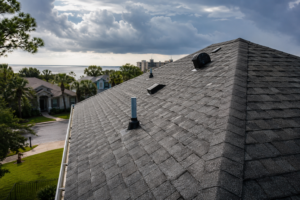
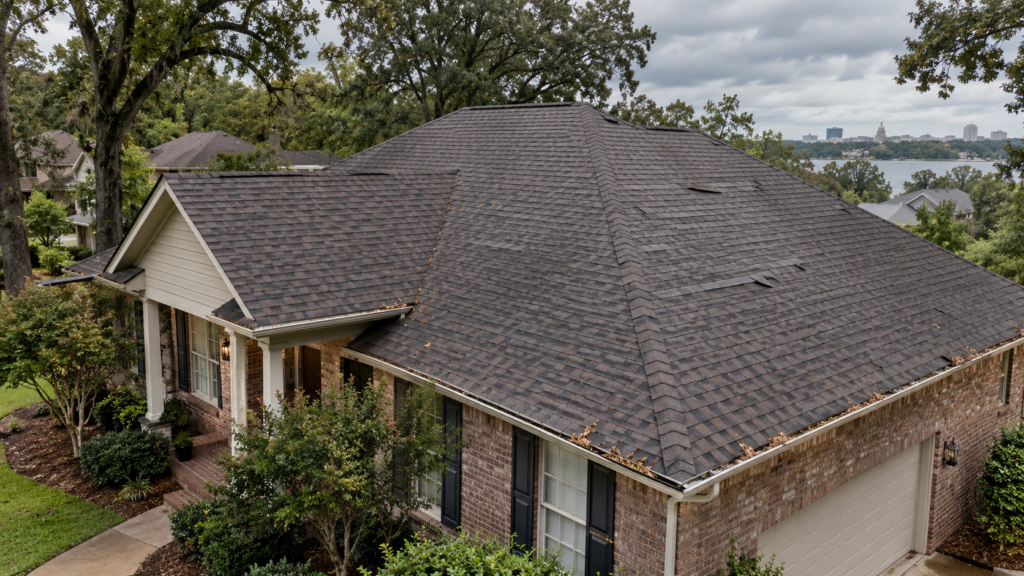
Shingles lifting or creasing can be an early warning sign of wind damage on a roof. In Jackson, MS, strong winds, heavy rain, severe thunderstorms, and seasonal storm systems can put pressure on asphalt shingles, especially if the roof is aging, poorly sealed, or already weakened.
Some lifted shingles may settle back down after a storm, but that does not always mean the roof is fine. Once a shingle seal is broken or a shingle crease forms, the roof may be more vulnerable to leaks, granule loss, wind uplift, and future storm damage.
For Jackson homeowners, the important question is not just whether the roof looks damaged from the ground. The bigger question is whether wind has weakened the shingles enough to affect how the roof protects the home.
Why Are My Shingles Lifting or Creasing?
Shingles lifting or creasing often happen when strong wind breaks the adhesive seal, bends the shingle tab backward, weakens the shingle mat, or exposes an aging roof to wind uplift. In Jackson, MS, this can happen after thunderstorms, high wind events, heavy rain, or repeated storm exposure. A roof inspection can help confirm whether the damage is minor, repairable, or part of a larger wind damage concern.
Why Wind Damage Matters for Jackson, MS Roofs
Jackson homeowners deal with strong thunderstorms, wind gusts, heavy rain, tree debris, humidity, and changing weather conditions. When wind moves across a roof, it can lift shingle edges and weaken the seal that keeps shingles flat.
Once that seal is broken, shingles may no longer perform the way they should. That is why shingles lifting or creasing should not be ignored, even if the roof does not have an active leak yet.
1. Lifted Shingles May Mean the Seal Has Been Broken
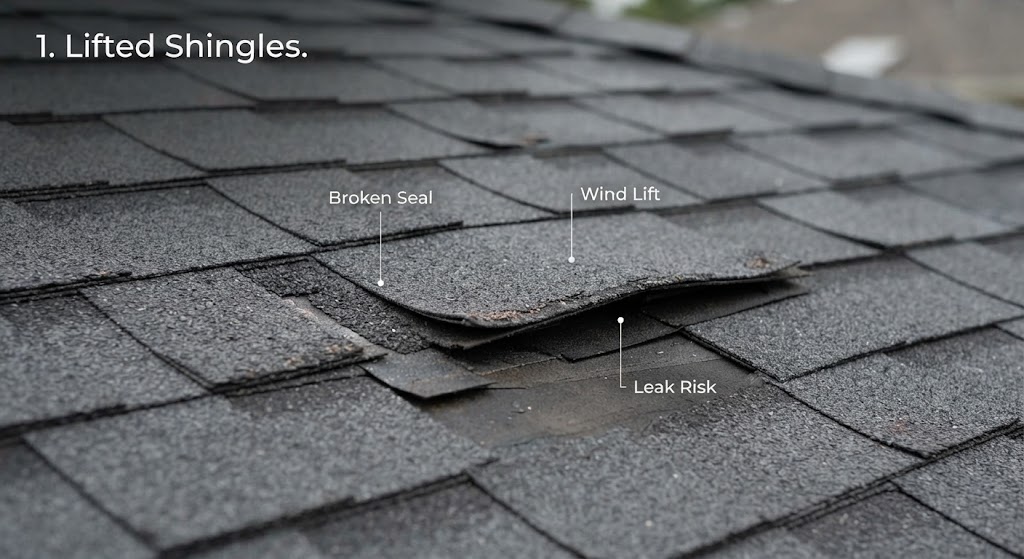
Asphalt shingles are designed to seal down and resist normal weather. Strong wind can lift a shingle tab and break that seal. Once the seal is damaged, the shingle may not lie flat or protect the roof as well during future storms.
Jackson homeowners may notice:
Raised shingle edges: The tab may no longer be sealed properly.
Loose or flapping shingles: Wind may have weakened the adhesive strip.
Uneven roof texture: Some shingles may look raised compared to others.
Leaks after storms: Water may enter under lifted shingles.
What this may mean: Shingles lifting or creasing may indicate that wind has compromised the roof surface, even if the shingle is still attached.
Limitation Note: Lifted shingles can be difficult to confirm from the ground. Homeowners should avoid climbing onto the roof after wind or rain.
2. Creased Shingles Can Be a Sign of Wind Bending
A creased shingle is different from a loose shingle. Creasing can happen when wind lifts the shingle tab and bends it backward far enough to damage the material. This can weaken the shingle and make it more likely to crack, tear, or fail later.
Signs of creased shingles may include:
Horizontal crease lines: The shingle tab may have been bent by wind.
Cracked shingle surface: The material may be weakened.
Granule loss along the crease: The bend may expose the shingle mat.
Loose tabs nearby: Wind damage may affect multiple shingles.
What this may mean: Creased shingles often need professional evaluation because the shingle may no longer provide reliable protection.
Limitation Note: A crease may be subtle and may not be visible from the yard. A roof inspection can help document the condition safely.
3. Wind Uplift Can Affect More Than One Roof Area
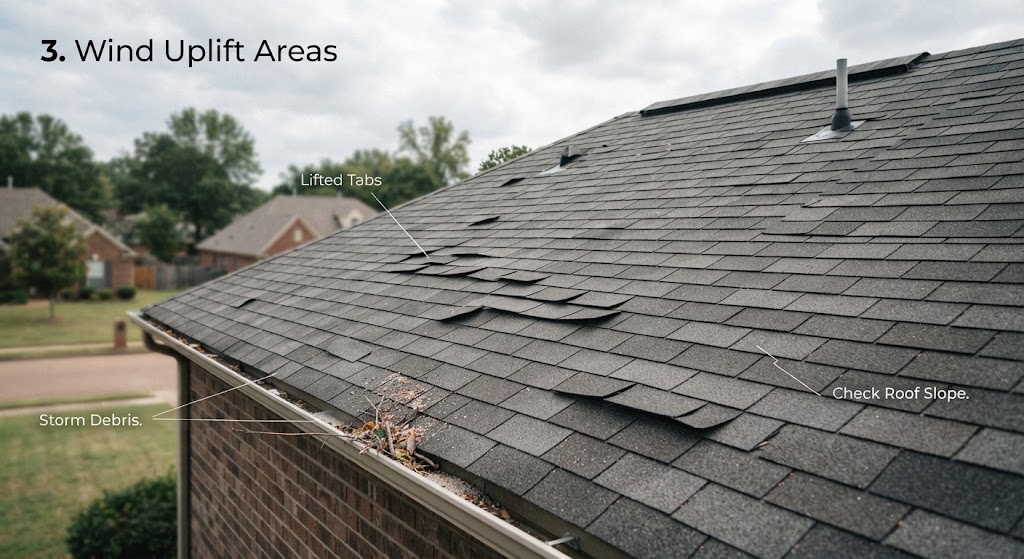
Wind damage does not always affect one single shingle. Wind can move across the roof in patterns, lifting shingles along edges, corners, ridges, valleys, and open roof slopes. Some areas are more exposed than others.
Common wind uplift areas include:
Roof edges: Wind pressure is often stronger along the perimeter.
Ridges and hips: Elevated roof areas can catch more wind.
Large open slopes: Wind can lift several tabs across one section.
Areas near trees: Branches and debris can add impact damage.
What this may mean: If shingles lifting or creasing appear in multiple areas, the roof may need a full wind damage inspection instead of a small spot repair.
4. Missing Shingles May Be the Next Stage of Wind Damage
Lifted and creased shingles may eventually become missing shingles if the roof is hit by more wind. Once a shingle is missing, the underlayment and roof deck may be more exposed to rain and moisture.
Warning signs may include:
Bare spots on the roof: A shingle may have blown off.
Shingle pieces in the yard: Storms may have torn roofing material loose.
Exposed nail heads: Water may reach vulnerable areas.
Leaks after heavy rain: Missing shingles can create water entry points.
What this may mean: Missing shingles should be addressed quickly because water can enter the roof system more easily.
Limitation Note: A missing shingle does not always mean the whole roof needs replacement, but the surrounding shingles should be checked for related wind damage.
5. Granule Loss Can Show Where Shingles Were Stressed
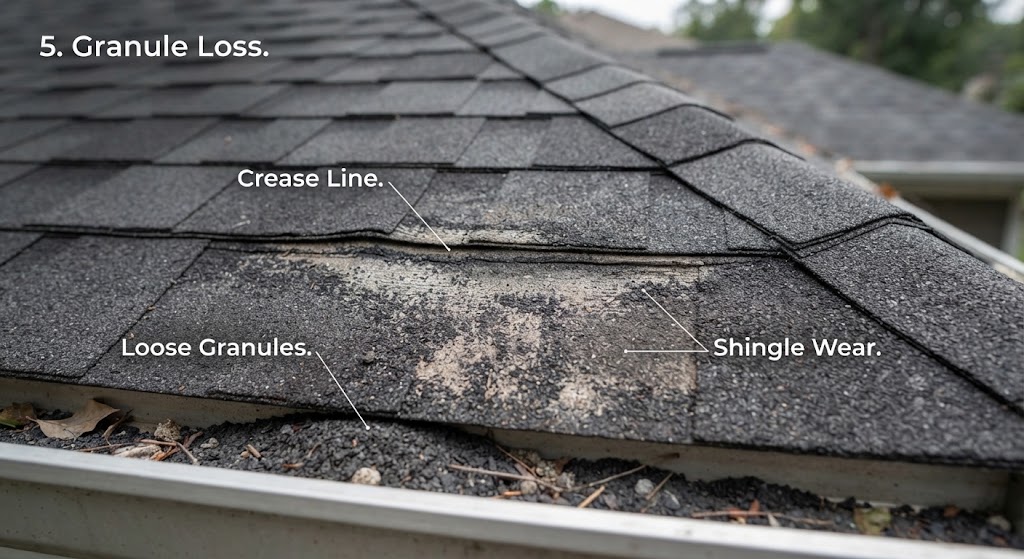
Granules help protect asphalt shingles from sunlight, weather, and wear. When shingles lift, bend, crease, or rub during storms, granules may loosen or wash into gutters and downspouts.
Granule warning signs include:
Dark patches on shingles: Granules may be missing.
Granules in gutters: Storms may wash loose granules down.
Wear along crease lines: Bent shingles may lose protection.
Uneven roof color: Some shingles may be aging or stressed faster.
What this may mean: Granule loss along with shingles lifting or creasing may suggest wind damage and shingle wear are happening together.
6. Wind Damage Can Lead to Roof Leaks Later
A roof does not always leak immediately after wind damage. Sometimes lifted or creased shingles create small weak points that only leak during future rain, wind-driven rain, or longer storms.
Leak-related warning signs include:
Ceiling stains: Brown or yellow stains may suggest water intrusion.
Attic moisture: Damp insulation or decking may point to leaks.
Musty odors: Moisture may be trapped inside the attic.
Leaks after windy rain: Water may enter under lifted shingles.
What this may mean: A roof can be damaged before it leaks. A professional inspection can help catch wind damage before interior moisture appears.
Limitation Note: Water can travel before showing inside the home, so the ceiling stain may not be directly below the roof damage.
7. Older Roofs Are More Vulnerable to Wind Damage
As shingles age, they may become more brittle, lose granules, or fail to seal as strongly as they once did. Older roofs may be more likely to experience lifting, creasing, cracking, or missing shingles after strong wind.
Age-related concerns may include:
Curling shingles: Edges may lift even before a storm.
Brittle shingles: Older shingles may crack more easily.
Weak adhesive seals: Shingles may not resist wind properly.
Recurring repairs: Repeated issues may suggest broader roof aging.
What this may mean: If shingles lifting or creasing keep appearing after storms, the roof may need more than a quick patch.
What Jackson, MS Homeowners Can Check From the Ground
Homeowners should avoid climbing onto a roof after a storm. Wet shingles, loose debris, lifted tabs, and hidden damage can make the roof unsafe.
From the ground, Jackson homeowners can look for:
Raised, lifted, or uneven shingle edges
Crease lines across shingle tabs
Missing shingles or exposed roof areas
Shingle pieces in the yard
Granules near gutters or downspouts
Branches, limbs, or debris on the roof
Ceiling stains or attic moisture after storms
If several warning signs are present, a roof inspection is the safest next step.
Jackson and Central Mississippi Wind Damage Concerns
This topic is especially relevant for homeowners in Jackson, Madison, Ridgeland, Brandon, Flowood, Clinton, and nearby Central Mississippi communities.
Homes in this region can experience strong thunderstorms, heavy rain, wind gusts, tree debris, humidity, and seasonal storm damage. These conditions make shingle condition, roof sealing, and storm inspections especially important.
When to Schedule a Wind Damage Roof Inspection
You should schedule a roof inspection if you notice shingles lifting or creasing, missing shingles, granule loss, roof leaks, attic moisture, debris on the roof, or signs of damage after strong wind.
Pro-Shield Roofing & Construction helps Mississippi homeowners with roof inspections, roof repairs, roof leak repair, roof replacements, metal roofing, storm damage concerns, and roofing services across Central MS and the Gulf Coast. If your shingles look lifted or creased after a storm, an inspection can help determine whether the roof needs repair, documentation, replacement planning, or continued monitoring.
Contact Pro-Shield Roofing & Construction to schedule an inspection.
Helpful External Resources for Homeowners
For additional homeowner education, review these trusted third-party resources:
National Weather Service thunderstorm safety guidance
Ready.gov severe weather preparedness
National Roofing Contractors Association
Limitation Note: General storm and roofing resources can help homeowners understand wind damage, but they cannot diagnose one specific roof from the ground.
FAQ: Shingles Lifting or Creasing in Jackson, MS
Why are my shingles lifting or creasing after wind?
Shingles lifting or creasing after wind may happen when strong gusts break the adhesive seal, bend the shingle tab, weaken the shingle mat, or expose existing roof wear.
Are lifted shingles considered wind damage?
Lifted shingles can be a sign of wind damage, especially if the seal is broken, the shingle is loose, or other nearby shingles show storm-related wear.
Do creased shingles need to be replaced?
Creased shingles may need replacement because the shingle material can be weakened where it bent. A roof inspection can confirm whether repair is needed.
Can lifted shingles cause roof leaks?
Yes. Lifted shingles can allow wind-driven rain to move underneath the roof surface, which may lead to leaks, decking moisture, or attic damage over time.
When should Jackson homeowners call a roofer after wind damage?
Jackson homeowners should call a roofer after strong wind if they notice lifted shingles, creased shingles, missing shingles, granule loss, roof debris, ceiling stains, or attic moisture.
Conclusion
Shingles lifting or creasing may look like a small roof issue, but it can be an important sign of wind damage. In Jackson, MS, strong storms and wind gusts can break shingle seals, bend tabs, loosen roofing materials, and create weak points for future leaks.
Not every lifted shingle means the entire roof needs replacement, but every visible wind damage concern should be checked. A professional inspection can help determine whether the roof needs repair, leak prevention, storm damage documentation, or replacement planning.
If you notice shingles lifting or creasing after wind in Jackson or nearby Central Mississippi areas, contact Pro-Shield Roofing & Construction to schedule an inspection and protect your home before the next storm causes more damage.