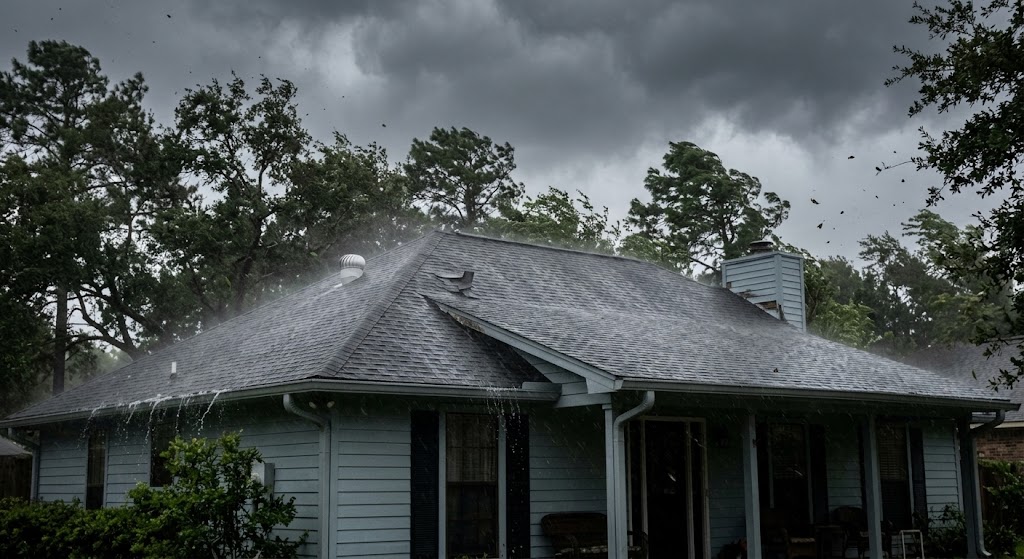
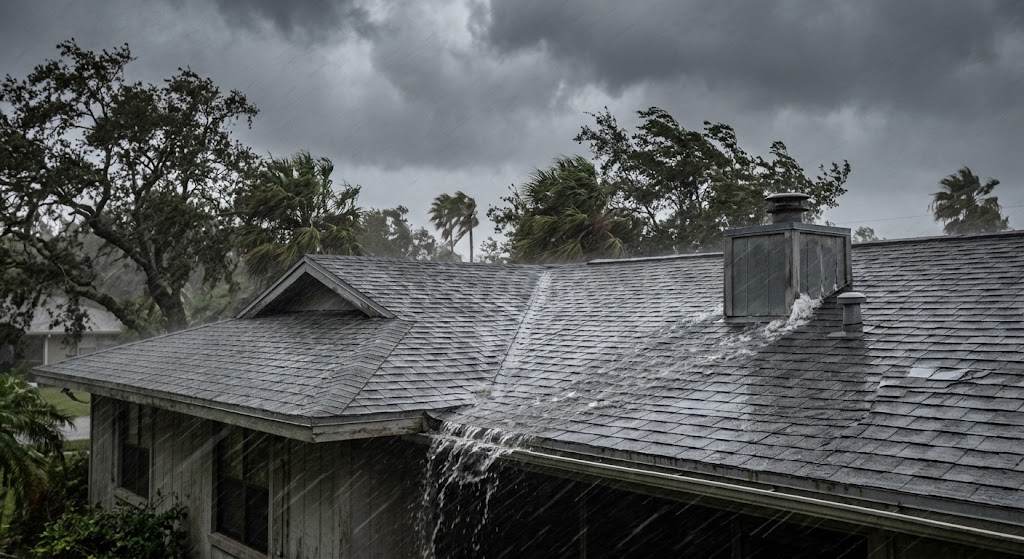
Gulf Coast wind-driven rain roof leak problems can be confusing because the roof may stay completely dry during a normal storm. A homeowner may see no leaks after steady rain, but during strong wind, water suddenly appears near a ceiling, wall, attic, light fixture, or window-adjacent area.
The reason is simple: wind changes how rain hits the roof. During a normal storm, rain usually falls downward and drains along the roof surface. During wind-driven rain, water can be pushed sideways, upward, and underneath vulnerable roof details. That pressure can expose small weaknesses around shingles, flashing, vents, pipe boots, valleys, dormers, chimneys, siding transitions, and roof edges.
For homeowners along the Gulf Coast, including Gulfport, Biloxi, Long Beach, Bay St. Louis, Ocean Springs, Pascagoula, Hattiesburg, Madison, Ridgeland, Central Mississippi, and surrounding communities, this type of leak should not be ignored. A leak that only happens during wind-driven rain is still a roof or exterior vulnerability that may get worse over time.
Pro-Shield Roofing & Construction is a licensed and insured, family-owned and operated roofing contractor serving Madison, Ridgeland, Gulf Coast Mississippi, Hattiesburg, Central Mississippi, and surrounding areas. Homeowners dealing with storm-related leaks can call (601) 265-4992 or request help through Get A Free Estimate.
Why Does a Roof Leak Only During Wind-Driven Rain?
A roof may leak only during wind-driven rain because strong wind pushes water into areas that normal rainfall does not reach. Common causes include lifted shingles, loose flashing, cracked pipe boots, exposed nail holes, weak roof-to-wall transitions, clogged gutters, siding gaps, and attic ventilation openings that allow wind-blown moisture to enter.
Normal rain tests the roof from above. Wind-driven rain tests the roof from the side. That is why a small weakness may only show up during coastal storms, tropical weather, or strong thunderstorm winds.
Why Wind-Driven Rain Is Different From Normal Rain
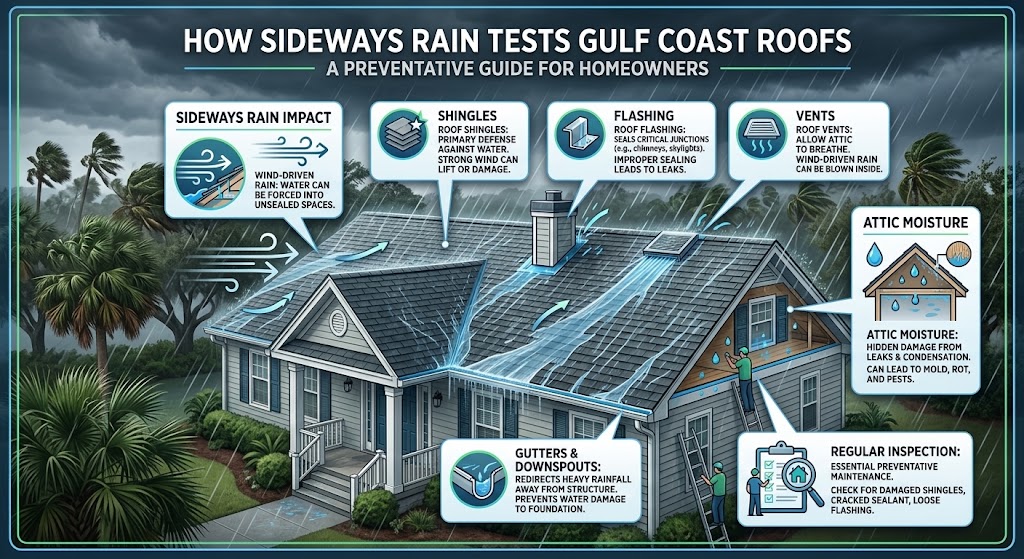
A Gulf Coast wind-driven rain roof leak often happens because sideways rain tests parts of the roof that normal downward rainfall may not reach.
Normal rain usually falls downward and follows the roof’s design. It hits the shingles, moves into valleys or gutters, and drains away from the home. Roof systems are designed to shed water downward, not hold back pressurized sideways rain from every direction.
Wind-driven rain behaves differently. It can push water under shingle edges, behind flashing, into vent openings, around siding transitions, and toward areas that usually stay dry. This is especially important along the Gulf Coast, where thunderstorms, tropical systems, and hurricane-season weather can bring strong wind and heavy rain together.
The National Weather Service explains that thunderstorms can produce damaging wind, heavy rain, and other severe weather hazards. Homeowners along coastal and storm-prone areas should treat wind-driven rain leaks as warning signs, even if the roof looks fine during lighter storms.
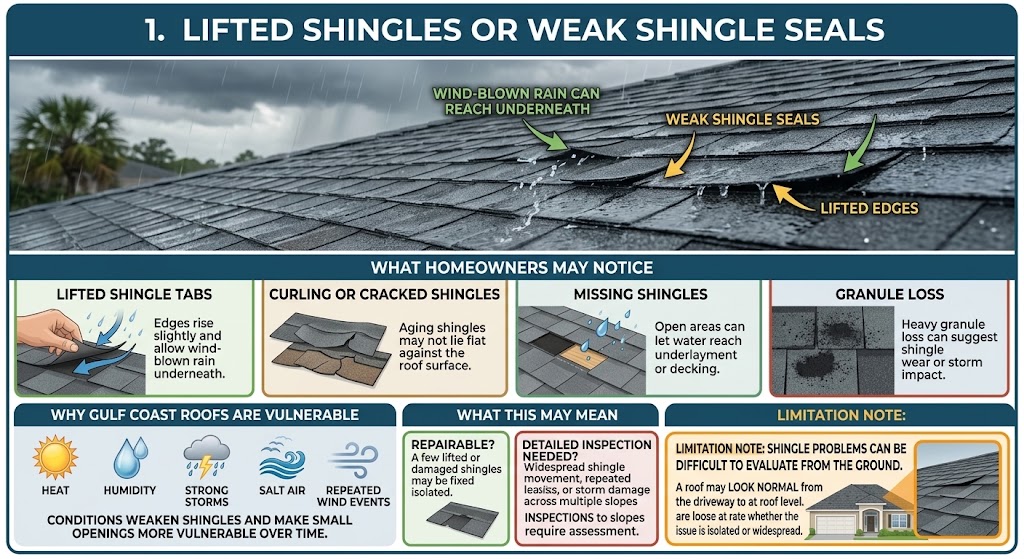
1. Lifted Shingles or Weak Shingle Seals
One common reason a roof leaks during wind-driven rain is lifted shingles or weakened shingle seals. Asphalt shingles are designed to overlap and shed water downward. But if wind pushes rain sideways, water may reach underneath shingle edges that are loose, curled, cracked, or no longer sealed properly.
Gulf Coast roofs are exposed to heat, humidity, strong storms, salt air in coastal areas, and repeated wind events. Over time, these conditions can weaken shingles and make small openings more vulnerable during sideways rain.
Homeowners may notice:
Lifted shingle tabs: Edges may rise slightly and allow wind-blown rain underneath.
Curling or cracked shingles: Aging shingles may not lie flat against the roof surface.
Missing shingles: Open areas can let water reach underlayment or decking.
Granule loss: Heavy granule loss can suggest shingle wear or storm impact.
What this may mean: A few lifted or damaged shingles may be repairable. Widespread shingle movement, repeated leaks, or storm damage across multiple roof slopes may require a more detailed roof inspection.
Limitation Note: Shingle problems can be difficult to evaluate from the ground. A roof may look normal from the driveway even if shingles are loose at roof level. A professional inspection can help determine whether the issue is isolated or widespread.
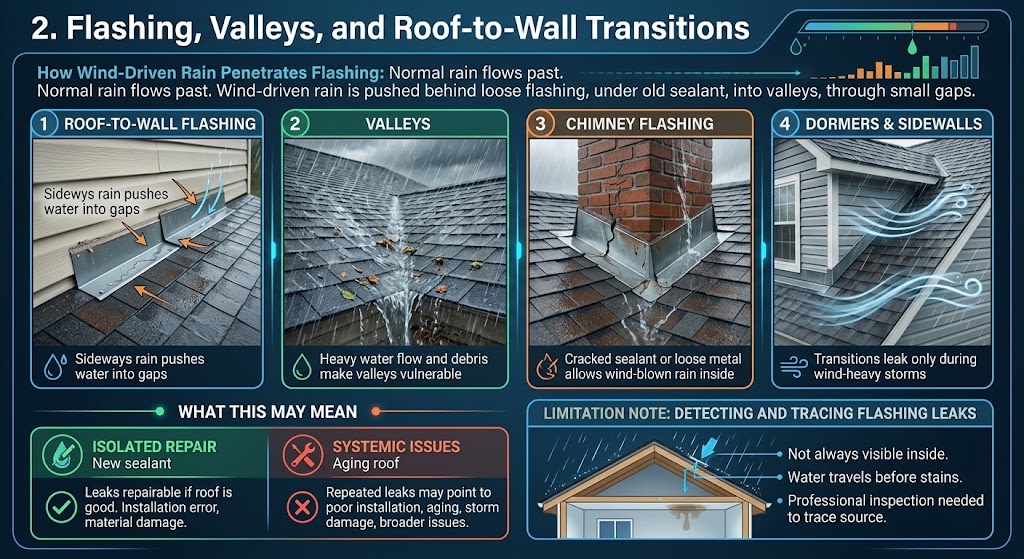
2. Flashing, Valleys, and Roof-to-Wall Transitions
A Gulf Coast wind-driven rain roof leak may start around flashing when wind pushes water behind metal edges, old sealant, or roof-to-wall transitions.
Flashing is one of the most important parts of the roof system during wind-driven rain. Flashing protects areas where the roof meets another surface or changes direction, including walls, chimneys, valleys, skylights, dormers, and roof edges.
During normal rainfall, water may flow past these areas without entering. But during wind-driven rain, water can be pushed behind loose flashing, under old sealant, into valley edges, or through small gaps near siding and roof transitions.
Common flashing-related leak points include:
Roof-to-wall flashing: Sideways rain can push water into gaps where the roof meets siding or walls.
Valleys: Heavy water flow and debris can make valleys more vulnerable.
Chimney flashing: Cracked sealant or loose metal can allow wind-blown rain inside.
Dormers and sidewalls: These transitions often leak only during wind-heavy storms.
What this may mean: Flashing leaks are often repairable if the surrounding roof is in good condition. However, repeated flashing leaks may point to poor installation, aging materials, storm damage, or broader roof system issues.
Limitation Note: Flashing problems are not always visible from inside the home. Water can enter at a roof transition and travel before showing up as a ceiling stain. A professional inspection may be needed to trace the source.
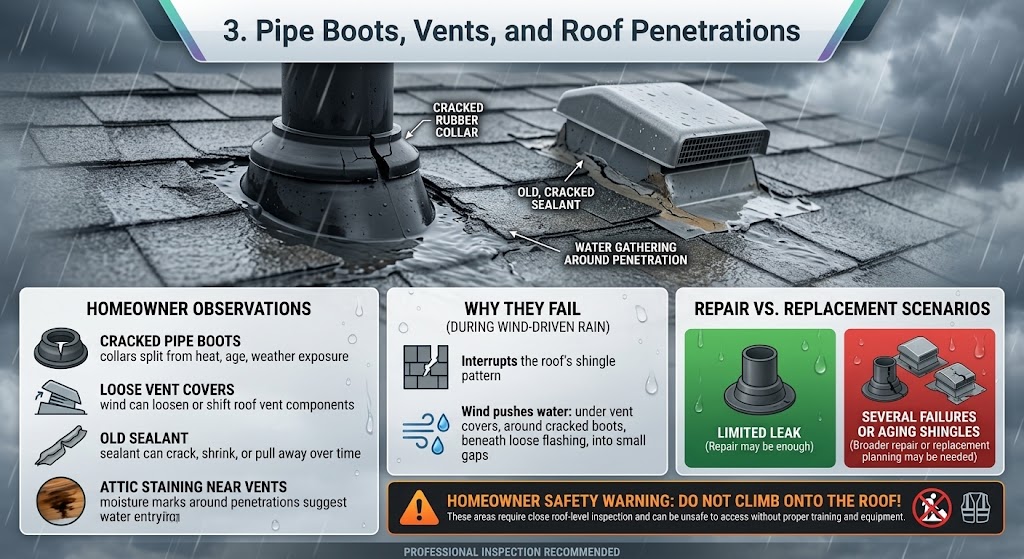
3. Pipe Boots, Vents, and Roof Penetrations
Every hole through the roof surface must be sealed properly. Pipe boots, vents, exhaust caps, skylights, and other roof penetrations are common leak sources during wind-driven rain because they interrupt the roof’s shingle pattern.
Normal rain may flow around these areas without issue. But wind-driven rain can push water under vent covers, around cracked rubber pipe boots, beneath loose flashing, or into small gaps where sealant has aged.
Homeowners should pay attention to:
Cracked pipe boots: Rubber collars can split from heat, age, and weather exposure.
Loose vent covers: Wind can loosen or shift roof vent components.
Old sealant: Sealant can crack, shrink, or pull away over time.
Attic staining near vents: Moisture marks around penetrations can suggest water entry.
What this may mean: If the leak is limited to one roof penetration, repair may be enough. If several penetrations are failing or the surrounding shingles are aging, broader roof repair or replacement planning may be needed.
Limitation Note: Homeowners should not climb onto the roof to inspect pipe boots or vents. These areas require close roof-level inspection and can be unsafe to access without proper training and equipment.
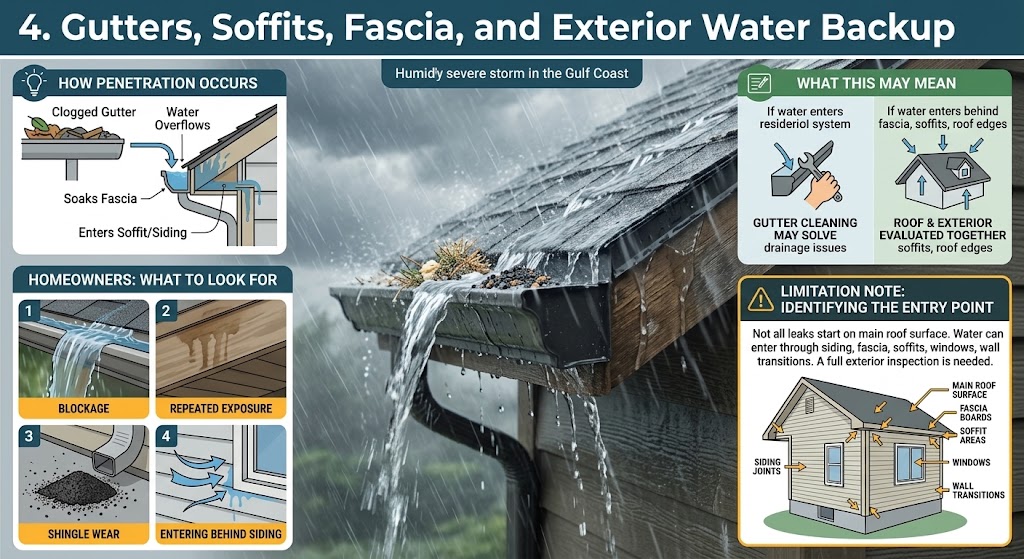
4. Gutters, Soffits, Fascia, and Exterior Water Backup
In some homes, a Gulf Coast wind-driven rain roof leak may actually begin near gutters, soffits, fascia, siding, or exterior trim instead of the main roof surface.
Sometimes a leak that appears to be a roof leak may involve gutters, soffits, fascia, or exterior water backup. When gutters are clogged or overwhelmed, wind-driven rain can push water into places it normally would not go.
During Gulf Coast storms, leaves, pine needles, shingle granules, and storm debris can clog gutters quickly. If water cannot drain properly, it may overflow near roof edges, soak fascia boards, enter soffit areas, or move behind siding.
Homeowners should look for:
Overflowing gutters: Water spilling over the front or back of gutters may indicate blockage.
Stained fascia or soffits: Dark marks may suggest repeated water exposure.
Granules near downspouts: This may point to shingle wear or storm damage.
Water near exterior walls: Wind can push water behind siding or trim openings.
What this may mean: Gutter cleaning may solve some drainage issues. But if water is entering behind fascia, soffits, or roof edges, the roof and exterior system should be evaluated together.
Limitation Note: Not every leak during wind-driven rain starts on the main roof surface. Water can enter through siding, fascia, soffits, windows, or wall transitions. A full exterior inspection can help identify the real entry point.
When Should Gulf Coast Homeowners Schedule a Roof Inspection?
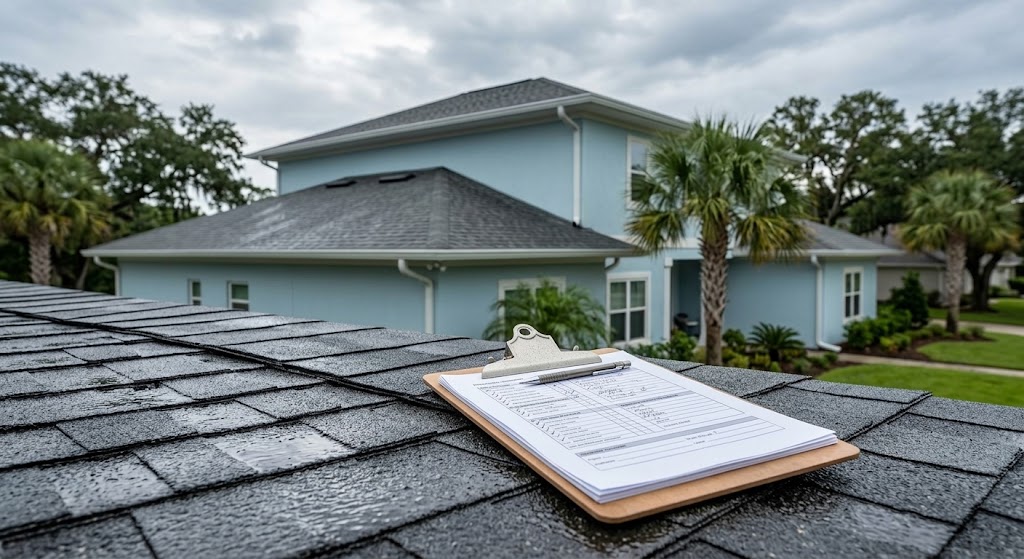
Homeowners should schedule a roof inspection if leaks happen during wind-driven rain, even if the home stays dry during normal storms. A leak that only appears under wind pressure can still indicate a roof or exterior weakness.
An inspection is especially important if the leak happens more than once, appears near the same area, follows tropical weather, occurs after high winds, or shows up with attic moisture, ceiling stains, musty smells, or bubbling paint.
Pro-Shield Roofing & Construction provides residential and commercial roofing services, roof repair, roof replacement, roof inspections, reroofing, roof installations, gutter installation, siding services, and exterior repair support. Pro-Shield is licensed and insured, family-owned and operated, and serves Madison, Ridgeland, Gulf Coast Mississippi, Hattiesburg, Central Mississippi, and surrounding areas. Homeowners can call (601) 265-4992 or request help through Get A Free Estimate.
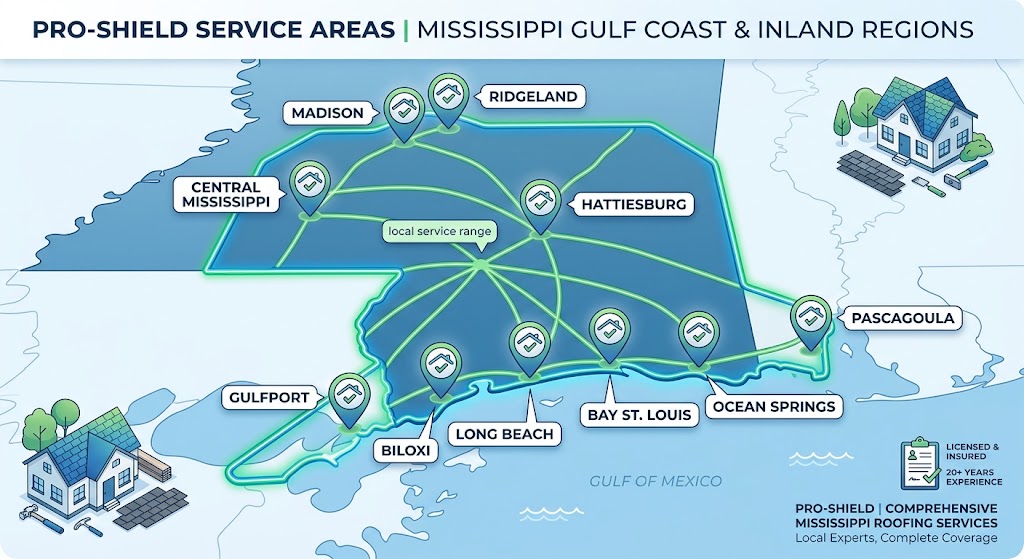
Gulf Coast Mississippi and Pro-Shield Service Areas
This topic is especially relevant for homeowners along the Mississippi Gulf Coast and surrounding service areas, including Gulfport, Biloxi, Long Beach, Bay St. Louis, Ocean Springs, Pascagoula, Hattiesburg, Madison, Ridgeland, Central Mississippi, and nearby communities.
Gulf Coast homes face wind-driven rain, tropical storm conditions, hurricane-season weather, heat, humidity, heavy rainfall, salt air exposure in coastal communities, and repeated storm activity. These conditions can expose roof weaknesses that may not show up during ordinary rainfall.
Trusted External Weather and Roofing Resources
Image Prompt for This Heading: Create a clean resource-style graphic showing a roof icon, hurricane icon, storm cloud icon, weather document icon, insurance icon, and checklist. Use a professional educational roofing style with no brand logos.
For external links, homeowners should rely on genuine third-party sources such as weather agencies, hurricane preparedness resources, roofing industry organizations, manufacturer documentation, and insurance education resources. These sources can help homeowners better understand wind-driven rain, storm safety, hurricane readiness, roof damage, and documentation after severe weather.
For hurricane tracking and tropical weather updates, homeowners can review the National Hurricane Center.
For hurricane preparation, homeowners can review Ready.gov Hurricanes and NOAA Hurricane Prep.
For severe thunderstorm safety, homeowners can review the National Weather Service thunderstorm safety resource and Ready.gov severe weather guidance.
For roofing industry guidance, homeowners can review educational resources from the National Roofing Contractors Association.
For manufacturer guidance on storm-related roof concerns, homeowners can review GAF storm damage resources.
Limitation Note: External resources are useful for education and preparedness, but they do not replace a roof-specific inspection. Weather resources and roofing guides can explain general risks, but they cannot confirm where water is entering one specific home.
Gulf Coast Homeowners Ask About Wind-Driven Rain Leaks
Your roof may leak only during wind-driven rain because strong wind pushes water under shingles, behind flashing, around vents, through roof-to-wall transitions, or into exterior gaps that normal rainfall does not reach.
Not always. Some wind-driven rain leaks can be repaired if the issue is isolated. Replacement may be considered if the roof has widespread shingle wear, repeated leaks, storm damage, or failing roof details.
Yes. Loose, old, rusted, or poorly sealed flashing may stay dry during normal rain but leak when wind pushes water sideways into roof transitions.
Conclusion
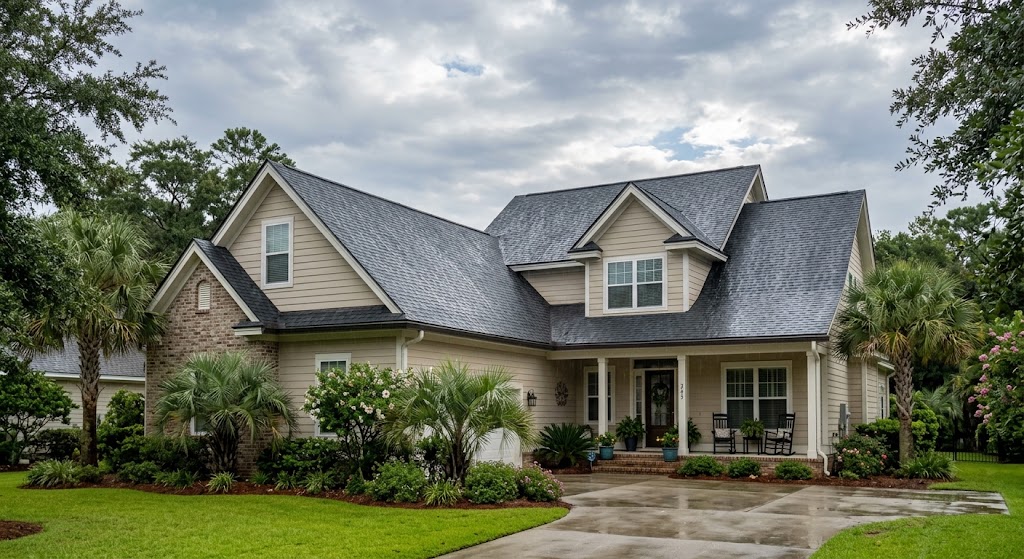
A roof that leaks during Gulf Coast wind-driven rain but stays dry during a normal storm is not unusual. Wind changes the direction and pressure of rain, pushing water into weak points that may not be tested during ordinary rainfall.
Common causes include lifted shingles, weak shingle seals, loose flashing, cracked pipe boots, vulnerable vents, clogged gutters, soffit or fascia issues, and roof-to-wall transition gaps.
The important thing is not to ignore the leak just because it only happens during certain storms. If water enters during wind-driven rain, the home has a vulnerability that should be checked before the next tropical system, severe thunderstorm, or hurricane-season weather event.
For help identifying the source of a wind-driven rain leak, homeowners can contact Pro-Shield Roofing & Construction, call (601) 265-4992, or request service through Get A Free Estimate.
Frequently Asked Questions
Wind-driven rain can push water under shingles, behind flashing, around vents, and into roof transitions that normal downward rainfall does not reach.
Wind-driven rain itself is a weather condition. The leak may be caused by roof damage, aging materials, weak flashing, poor sealing, exterior gaps, or storm-related vulnerabilities.
Yes. Even a small leak can worsen over time if water continues entering the roof system, attic, insulation, or interior walls.
Yes. A leak that appears only during big storms still indicates a vulnerability that should be inspected before the next severe weather event.
Pro-Shield Roofing & Construction can help homeowners with roof inspections, roof repairs, storm damage concerns, gutter issues, siding-related exterior concerns, and roof replacement planning in Gulf Coast Mississippi and surrounding areas.