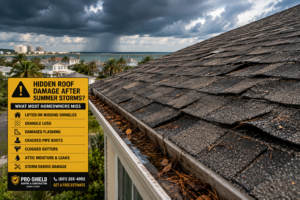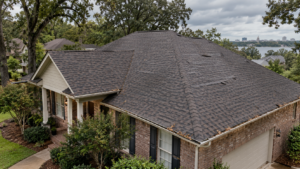
A Gulfport post-hurricane roof inspection is an important consideration for homeowners who have experienced strong winds, heavy rainfall, or other coastal storms. Even when a roof looks normal from the ground, seasonal weather can expose or create weaknesses in shingles, flashing, roof penetrations, and drainage components.
Living along the Mississippi Gulf Coast means preparing for changing weather conditions throughout the year. Hurricanes and tropical storms can produce damaging winds, wind-driven rain, and flying debris, while ordinary thunderstorms can also affect residential roofing systems.
The official Atlantic hurricane season extends from June 1 through November 30. As the season winds down, fall provides a useful opportunity for Gulfport homeowners to review their roof’s condition, especially if the property experienced severe weather earlier in the year.
Not every storm causes roof damage, and not every visible mark means a roof needs replacement. The goal is to recognize meaningful warning signs and determine whether maintenance, localized repairs, or professional evaluation may be necessary.
In this guide, Pro-Shield Roofing & Construction explains what Gulfport homeowners should check after stormy weather, how coastal conditions affect roofing materials, and when to schedule a professional roof inspection in Mississippi.
Quick Answer: What Should Gulfport Homeowners Check After Hurricane-Season Storms?
Following strong winds, heavy rain, or severe tropical weather, Gulfport homeowners should examine their property for visible roofing damage from a safe location.
Important areas to check include:
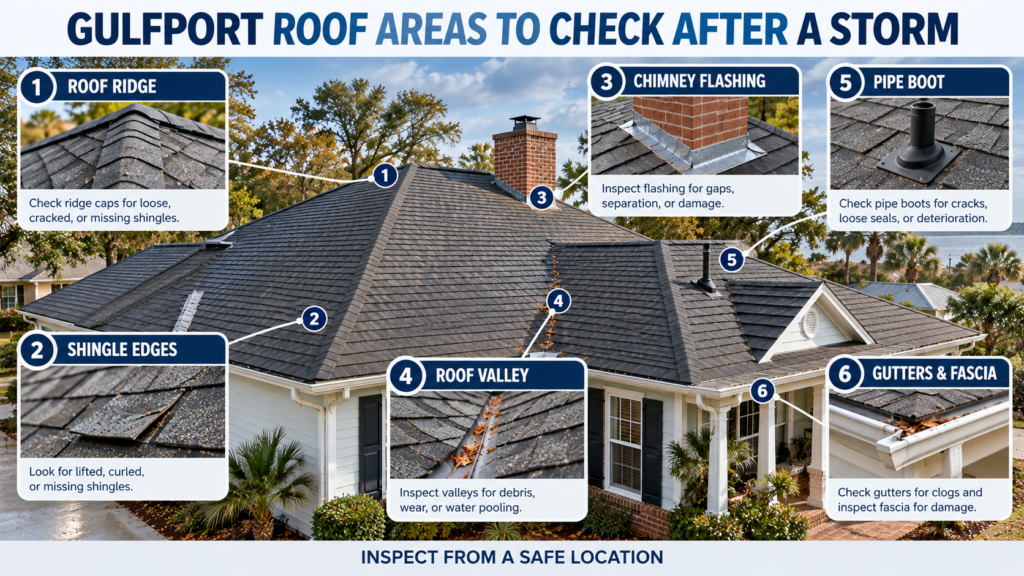
- Missing, lifted, or creased asphalt shingles
- Loose ridge caps and damaged roof edges
- Flashing around chimneys, skylights, and walls
- Plumbing vent boots and roof-mounted accessories
- Metal roof panels, seams, and exposed fasteners
- Gutters, downspouts, and drainage connections
- Debris lodged in roof valleys
- Water staining near fascia boards and soffits
- Ceiling stains and attic moisture
- Signs of structural movement or storm-related impact damage
The most important priority is safety.
If a building has significant structural damage, downed power lines, or other dangerous conditions, stay away and follow local emergency guidance.
The National Weather Service’s post-hurricane safety guidance emphasizes waiting until officials declare conditions safe before returning to or examining storm-affected properties.
Once it is safe, homeowners can document visible concerns and arrange professional evaluation when necessary.
Why Post-Hurricane Roof Checks Matter in Gulfport, Mississippi
Gulfport’s coastal location means roofing systems may be exposed to strong winds, heavy rain, salt-laden air, high humidity, and other weather conditions throughout their service life.
The impact of a particular storm depends on many factors, including its track, wind speed, duration, the home’s exposure, and the condition of its roofing system.
What Makes Gulf Coast Roofing Different?
Wind-driven rain
Strong winds can push rain against roof-to-wall intersections and other vulnerable connections.
Wind uplift
Airflow around roof edges, ridges, and corners can place uplift forces on roofing components.
Flying debris
Branches and windborne objects may damage roofing materials, skylights, and roof accessories.
Coastal corrosion exposure
Salt-laden moisture may contribute to corrosion of susceptible metal components over time.
Persistent humidity and rainfall
Existing openings or drainage problems may expose vulnerable materials to additional moisture.
These risks do not mean every Gulfport home requires a new roof after hurricane season.
They explain why an inspection focused on actual material condition can be more useful than judging the roof only by its age.
1. Check for Missing, Lifted, or Wind-Damaged Shingles
Asphalt shingles are designed to overlap and shed water down the roof.
However, strong winds can place significant pressure on exposed roofing areas, including edges, corners, ridges, and hips.
When wind forces exceed the resistance of a weakened connection, shingles may lift, crease, tear, or become displaced.
Common Signs of Wind-Related Shingle Damage
Missing shingles
A shingle that has blown away may leave protective underlayment or other roofing layers more exposed.
Lifted shingle edges
Shingles with weakened adhesive bonds may no longer lie securely against the roof.
Creased shingles
A shingle that has been lifted or folded by strong winds may show a visible crease or other physical damage.
Loose ridge caps
Shingles or other materials covering roof ridges and hips may loosen during severe weather.
Roofing debris in the yard
Shingle fragments discovered after a storm may indicate that part of the roof deserves closer examination.
Can Wind Damage Be Hidden?
Yes.
Some shingles may settle back into place after being lifted, making the problem difficult to notice from the driveway.
That does not automatically mean the shingles are damaged, but suspected wind-related defects may require closer professional evaluation.
What Should Homeowners Do?
Observe the roof from the ground or another safe location.
Do not pull on shingles, lift roofing materials, or climb onto the roof to check their condition.
If multiple areas appear affected, consider professional roof repair services or a documented roofing inspection.
2. Inspect Roof Flashing Around Chimneys, Walls, and Skylights
Roof flashing is designed to direct water away from intersections where the continuous roofing surface meets another building component.
These connections are especially important during heavy and wind-driven rainfall.
Flashing Areas That Deserve Attention
Chimney flashing
Look for visibly displaced metal, damaged mortar connections, or recurring staining near the chimney.
Roof-to-wall flashing
Check where roof slopes meet siding, dormers, or other vertical surfaces.
Skylight flashing
Watch for moisture stains, loose components, or signs of water entry near skylights.
Roof valley flashing
Observe areas where two roof slopes meet and runoff becomes concentrated.
Plumbing vent flashing
Look for cracked rubber boots or other damaged sealing components around roof penetrations.
Why Can Flashing Problems Be Difficult to Diagnose?
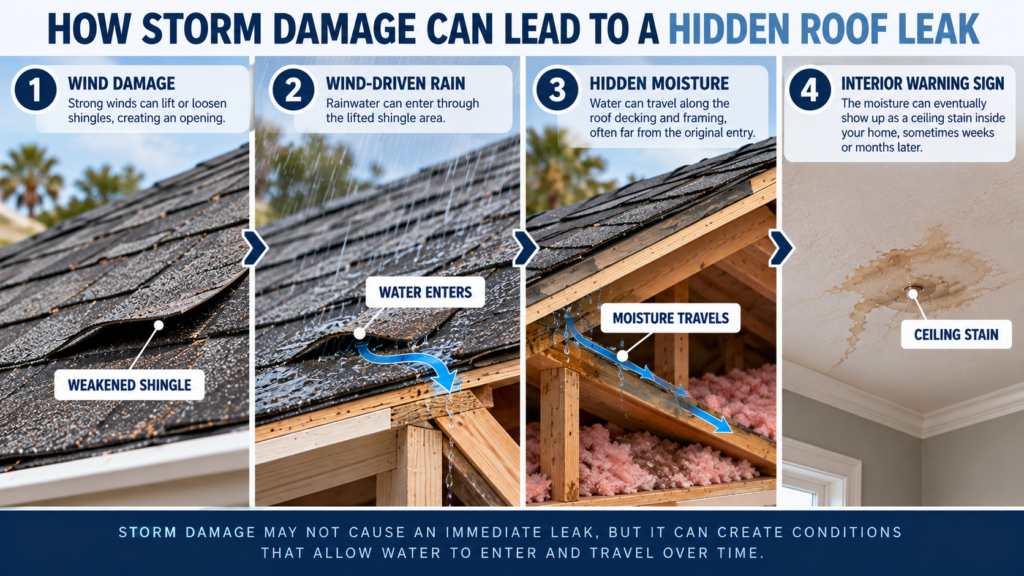
Water entering through a damaged roof connection may travel along decking, framing, or insulation before appearing inside.
A ceiling stain can develop some distance from the actual entry point.
This is why the first visible sign of moisture does not always identify the location that needs repair.
A professional roof leak inspection and repair may be necessary to identify the source.
3. Examine Roof Vents, Pipe Boots, and Other Penetrations
Every opening through a roof requires suitable weatherproofing.
Plumbing vents, exhaust vents, skylights, and other equipment can create vulnerable areas if their flashing or seals become damaged.
What Could Go Wrong After Strong Winds?
Storms may loosen roof accessories, displace components, or expose defects that were already present.
Over time, rubber pipe boots can also deteriorate because of sunlight, temperature changes, and aging.
Warning Signs to Look For
- Cracked pipe boot seals
- Loose roof vent covers
- Displaced metal flashing
- Missing fasteners or visibly loose components
- Water stains beneath roof penetrations
- Recurring leaks during heavy rainfall
Not every damaged roof accessory requires replacement of the surrounding roof.
Localized repairs may be appropriate when the remaining roofing materials are in good condition.
However, a professional should determine whether water has reached the underlying roof assembly.
4. Check Metal Roofing Panels and Fasteners for Storm-Related Problems
Metal roofing is another roofing option used on residential and commercial properties across the Mississippi Gulf Coast.
When properly designed and installed, metal roofing systems can provide durable weather protection.
However, not all metal roofs use identical fastening systems, panel profiles, or flashing details.
What Should Metal Roof Owners Check?
Loose or displaced panels
A panel that appears uneven or separated may need professional evaluation.
Damaged panel edges
Wind or debris impacts may affect exposed panel edges or trim components.
Exposed fastener problems
On roofs that use exposed fasteners, damaged sealing washers or loose fasteners may create moisture-entry concerns.
Seam and flashing damage
Panel connections and roof transitions should remain properly secured and weather-resistant.
Corrosion
Coastal moisture can contribute to corrosion where vulnerable metal finishes or incompatible materials are exposed.
Does Rust Always Mean a Metal Roof Needs Replacement?
No.
Localized surface corrosion and widespread material deterioration are different conditions.
A qualified roofing contractor can determine whether maintenance, component repairs, or more extensive work is needed.
Learn more about the available options through Pro-Shield’s metal roofing services.
5. Look for Hidden Interior Roof Leaks After Heavy Rain
One of the most important post-storm checks happens inside the home.
A roof does not always produce an obvious drip when moisture first enters.
Water may travel through concealed spaces or become absorbed by wood, insulation, and drywall before leaving a visible mark.
Interior Warning Signs
- Yellow or brown ceiling stains
- Water marks near exterior walls
- Damp attic insulation
- Staining around chimney connections
- Bubbling or peeling paint
- Musty odors in enclosed spaces
- Moisture appearing after heavy rainfall
Is Every Ceiling Stain Caused by Roof Damage?
No.
Possible causes include roof leaks, plumbing problems, HVAC condensation, and other building moisture issues.
The source should be identified before replacing roofing materials or repairing interior finishes.
Why Should Gulfport Homeowners Address Moisture Promptly?
Persistent moisture can affect drywall, insulation, wood, and other materials.
The EPA’s guide to mold and moisture recommends correcting water problems and drying affected areas promptly, ideally within 24–48 hours, to help limit mold growth.
If you notice active water entry, protect belongings when safe and arrange appropriate professional assistance.
6. Inspect Gutters, Downspouts, Fascia, and Soffits
Gutters and roof-edge components can be affected by strong winds, falling branches, and heavy rainfall.
After stormy weather, debris may collect in gutter channels or block downspout outlets.
Important Warning Signs
- Gutters pulling away from fascia boards
- Loose or damaged brackets
- Downspouts that have become detached
- Leaves and branches restricting water flow
- Water spilling over gutter edges
- Fascia staining or deterioration
- Damaged soffit panels
- Water collecting near the foundation
Why Are Soffits and Fascia Important?
Fascia boards support roof-edge components and can be exposed to moisture when gutters overflow.
Soffits enclose the underside of roof overhangs and may contain ventilation openings, depending on the roof design.
If strong winds damage soffit materials or roof-edge connections, they should be evaluated rather than left exposed.
What About Gutter Replacement?
Not every gutter problem requires a complete replacement.
However, bent, detached, or heavily deteriorated systems may need repairs or new components.
Pro-Shield provides gutter installation services for qualifying roofing and exterior improvement projects.
7. Check Roof Valleys and Clear Storm Debris Safely
Roof valleys are drainage pathways formed where two sloping roof sections meet.
During heavy rainfall, substantial runoff may flow through these areas.
Following strong winds, leaves, twigs, and small branches may collect in valleys and around roof transitions.
What Should Homeowners Look For?
- Heavy leaf buildup
- Branches lodged between roof slopes
- Damaged valley flashing
- Loose or displaced shingles
- Recurring moisture near roof intersections
- Debris covering visible drainage components
A small amount of debris does not automatically indicate damage.
However, significant accumulation can interfere with normal drainage and conceal problems that deserve attention.
Safety reminder: Do not climb onto a roof to remove storm debris. If cleaning requires elevated access, contact a qualified professional.
8. Understand the Difference Between Wind Damage, Water Intrusion, and Storm Surge
For Gulfport homeowners, it is important to distinguish roof damage caused by wind from other types of property damage associated with tropical weather.
These conditions may occur during the same storm but involve different mechanisms.
Wind Damage
Strong winds may lift or remove shingles, damage roof accessories, or move debris into the roofing system.
Wind-Driven Rain
Rain pushed by strong winds may reach vulnerable roof connections and existing openings.
Storm Surge and Flooding
Rising coastal water can damage lower portions of a building, its contents, and other structural components.
Storm surge is not the same as rainwater entering through damaged roofing materials.
Why Does the Difference Matter?
Identifying the actual source of damage helps guide the repair process and documentation.
It may also matter when homeowners review their insurance coverage.
Different policies may treat wind, rain, flood, and storm-surge losses differently.
The Mississippi Insurance Department’s weather-disaster preparedness guide provides recommendations on documenting damage and taking appropriate steps after a hurricane.
Homeowners should confirm coverage and reporting requirements directly with their insurer.
9. Should You Schedule a Roof Inspection Even Without an Active Leak?
A visible leak is not the only reason to consider a professional roofing inspection.
Certain defects may affect the roof’s weather resistance without immediately producing interior damage.
When an Inspection May Be Helpful
- Strong winds may have lifted shingles.
- Debris struck the roof.
- Several roof accessories appear damaged.
- Metal panels or flashing look loose.
- Gutters or soffits were displaced.
- New interior staining appeared after rain.
- The roof has aging materials or recurring repair problems.
- You are unsure whether the roof sustained storm-related damage.
What Can a Professional Roof Inspection Evaluate?
Depending on the property and inspection scope, roofing professionals may examine:
- Visible shingle condition
- Roof valleys and ridge materials
- Chimney and wall flashing
- Roof vents and pipe boots
- Metal roof seams and fasteners
- Gutters and roof-edge components
- Visible signs of moisture entry
- Storm-related deterioration
- Overall roofing condition
Pro-Shield Roofing & Construction provides professional roof inspections throughout Central Mississippi and the Gulf Coast.
An inspection can help determine whether the roof requires maintenance, localized repairs, or a more substantial roofing project.
10. Roof Repair or Replacement After Hurricane-Season Storms?
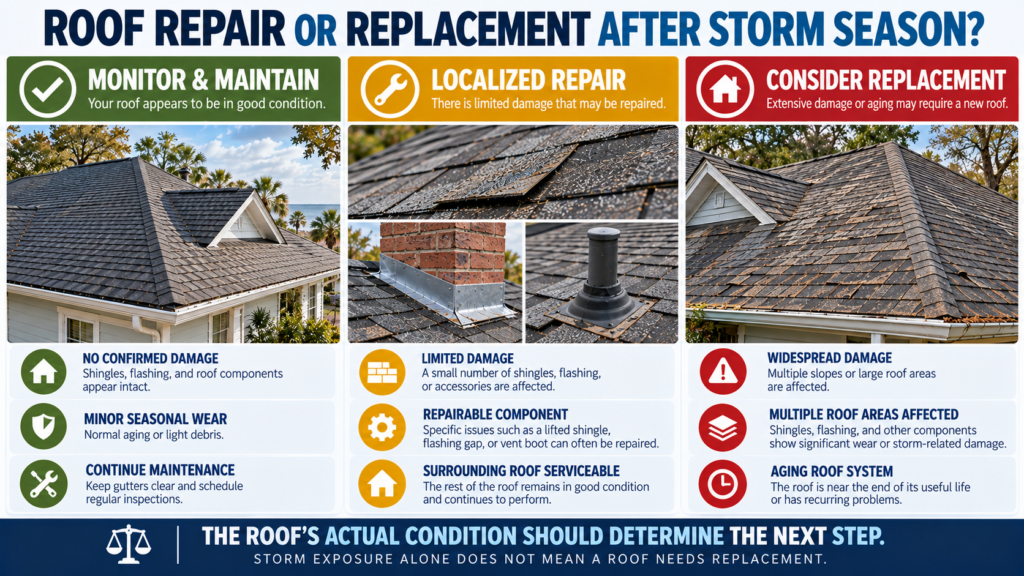
One of the most common homeowner concerns after severe weather is whether roofing damage requires repair or complete replacement.
The answer depends on the roof’s actual condition.
When Roof Repair May Be Appropriate
Localized repairs may be suitable when:
- A small number of shingles are damaged.
- A limited flashing defect has been identified.
- A plumbing vent boot needs replacement.
- A specific leak source is repairable.
- The surrounding roof remains in serviceable condition.
When Roof Replacement May Be Worth Considering
A larger roofing project may be appropriate when:
- Roofing damage affects multiple slopes.
- Shingle deterioration is widespread.
- Roof components have extensive wind damage.
- Leaks repeatedly return after appropriate repairs.
- Underlying roof materials are significantly deteriorated.
- The existing roofing system is near the end of its useful life.
Does Every Gulf Coast Roof Need Replacement After a Hurricane?
No.
Storm exposure does not automatically mean a roof was damaged, and even confirmed damage may be localized.
The appropriate solution should be based on the condition of the roofing materials, the extent of the damage, and the performance of the remaining roof.
Pro-Shield offers roof repair and roof replacement services for Mississippi property owners.
11. What Should Gulfport Homeowners Do Before Filing a Storm Damage Insurance Claim?
Documenting the condition of the home can be useful when roofing damage may involve an insurance claim.
However, not every storm-related issue is covered by every homeowners insurance policy.
Steps to Consider
Document visible damage.
Take photographs of damaged roofing materials, displaced gutters, interior stains, or fallen debris from safe locations.
Record relevant storm information.
Keep the date or approximate timing of the event and any available property records.
Review your policy.
Understand your deductible, coverage exclusions, and applicable notice requirements.
Contact your insurance company.
Ask about documentation, inspection procedures, and the claims process.
Arrange appropriate professional evaluation.
A roofing contractor can provide findings about visible roofing conditions and potential repair needs.
What If Temporary Protection Is Needed?
When an active leak or missing roof covering creates further exposure, qualified professionals may install temporary protection until permanent repairs can be completed.
Homeowners should not attempt to install tarps themselves on unsafe roof surfaces.
The Mississippi Insurance Department recommends documenting property damage and taking reasonable, safe measures to prevent additional loss.
Insurance coverage remains subject to the specific policy and insurer’s determination.
12. Fall Post-Hurricane Roof Checklist for Gulfport Homeowners
After severe weather has passed and the property is safe to inspect, use the following checklist.
Exterior Roofing Materials
- Look for missing shingles.
- Check for lifted or uneven shingle edges.
- Observe roof ridges and hips.
- Look for visible metal roof panel movement.
- Check for fallen branches and debris.
Flashing and Roof Penetrations
- Observe chimney flashing.
- Look for damage near skylights.
- Check visible plumbing vent boots.
- Inspect roof-to-wall connections from a safe location.
- Note any visibly loose roof accessories.
Gutters and Roof Edges
- Look for displaced gutters.
- Check for loose downspouts.
- Observe signs of fascia staining.
- Watch for damaged soffit panels.
- Check drainage during rainfall.
Interior and Attic Conditions
- Examine ceilings for new discoloration.
- Check safely accessible attic spaces for damp insulation.
- Look for water staining near chimneys.
- Note moisture around roof penetrations.
- Record unexplained leaks after heavy rain.
Documentation and Professional Follow-Up
- Photograph observed concerns.
- Avoid walking on the roof.
- Review previous roofing repairs.
- Arrange an inspection when appropriate.
- Discuss repair options after damage is assessed.
- Contact your insurer when coverage questions arise.
Important: If the home has serious structural damage, electrical hazards, downed power lines, or floodwater, do not approach the affected area until authorities or qualified professionals determine it is safe.
Post-Hurricane Roofing Concerns Across Gulfport and the Mississippi Gulf Coast
Gulfport homes vary in age, roofing materials, elevation, and proximity to coastal exposure.
A home with architectural asphalt shingles may have different inspection needs from a property with a standing-seam metal roof.
Likewise, a house surrounded by mature trees may experience more debris accumulation after strong winds than a home with limited nearby vegetation.
These roofing considerations are relevant throughout Gulfport and surrounding Mississippi Gulf Coast communities, including:
- Gulfport, MS
- Biloxi, MS
- Long Beach, MS
- Pass Christian, MS
- D’Iberville, MS
- Ocean Springs, MS
- Bay St. Louis, MS
- Waveland, MS
- Diamondhead, MS
- Pascagoula, MS
Not all properties experience the same degree of storm exposure, even within one community.
Roof age, materials, installation quality, structural connections, and local conditions influence how a roofing system responds.
Pro-Shield Roofing & Construction serves Gulfport and surrounding Mississippi Gulf Coast communities with roofing inspections, repairs, and replacement services.
Explore Pro-Shield’s Mississippi service areas to learn more.
Frequently Asked Questions About Gulfport Post-Hurricane Roof Inspections
Should Gulfport homeowners have their roof inspected after hurricane-season storms?
A professional inspection can be useful after significant winds, debris impacts, heavy rain, or suspected roofing damage. Not every property needs repairs, but an inspection may help identify defects that are difficult to recognize from the ground.
What are the most common signs of wind damage on a roof?
Possible signs include missing shingles, lifted or creased shingle edges, displaced ridge materials, damaged roof accessories, and loose flashing. The exact damage depends on the roofing system and storm conditions.
Can a roof have hurricane-related damage without leaking?
Yes. Some roofing defects may not cause immediate interior water intrusion. Damaged shingles, roof accessories, or flashing may remain vulnerable without producing a visible leak during every rainfall.
How can I inspect my roof safely after a tropical storm?
Wait until conditions are safe, follow local officials’ instructions, and examine the property from the ground. Do not climb onto the roof. Stay away from downed power lines, unstable structures, and flooded areas.
Does salt air damage Gulfport metal roofs?
Coastal salt-laden moisture may accelerate corrosion on vulnerable or improperly protected metal components. Proper material selection, compatible fasteners, and maintenance can help protect the roofing system.
Can damaged flashing cause hidden roof leaks?
Yes. Water entering through damaged chimney flashing, roof-to-wall connections, or roof penetrations may travel through concealed materials before becoming visible inside the home.
Does every roof need to be replaced after a hurricane?
No. Some roofs remain in good condition, while others may need localized repairs or replacement. The appropriate recommendation depends on documented damage and overall roofing condition.
Should I file a homeowners insurance claim for roof damage?
Review your insurance policy and speak directly with your insurer about coverage, documentation, deductibles, and claim deadlines. A professional roofing inspection may help identify damage, but coverage decisions belong to the insurance company.
When does Atlantic hurricane season end?
The official Atlantic hurricane season runs from June 1 through November 30. Tropical storms can occasionally develop outside those dates, so Gulf Coast homeowners should maintain storm preparedness throughout the year.
Does Pro-Shield Roofing & Construction provide Gulfport roof inspections?
Yes. Pro-Shield provides residential and commercial roofing inspections in Gulfport and throughout its Mississippi Gulf Coast service area.
Conclusion: Know Your Roof’s Condition After Gulf Coast Storms
A Gulfport post-hurricane roof inspection can help homeowners identify roofing concerns after severe weather and make informed decisions before additional damage develops.
Missing shingles, loose flashing, damaged vents, detached gutters, and hidden moisture may signal problems that deserve professional attention.
However, not every roof exposed to strong winds or heavy rain needs major work. Localized defects may be repairable, while widespread damage may require a more comprehensive roofing solution.
The most important step is understanding the condition of the roof instead of assuming that storm exposure automatically means replacement is necessary.
For Gulfport homeowners, fall provides an opportunity to document storm-related concerns, review roofing materials, and prepare for future severe weather.
Concerned that hurricane-season storms may have affected your Gulfport roof?
Explore Pro-Shield Roofing & Construction’s professional roof inspections, review its roofing repair services, or contact the team to discuss your roofing needs.
A professional evaluation can help determine whether maintenance, localized repairs, or roof replacement is the appropriate next step.