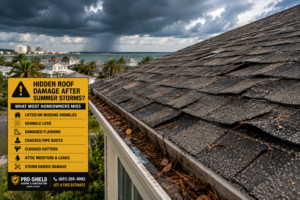
Gulf Coast humidity roof damage can start long before homeowners see missing shingles or an active roof leak. In areas like Gulfport, Biloxi, Ocean Springs, Pascagoula, and Bay St. Louis, warm moist air can build up inside the attic and slowly affect the roof from underneath.
Many homeowners think roof damage only comes from storms, wind, hail, or heavy rain. Those are important concerns, but trapped attic moisture can also weaken roof decking, shorten shingle life, affect insulation, create musty odors, and contribute to mold or mildew concerns inside the home.
That does not mean every humid attic has serious roof damage. Some homes only need better ventilation, insulation review, leak repair, or a professional roof inspection. But if you live along the Mississippi Gulf Coast, knowing the signs of trapped attic moisture can help you catch roof problems before they become expensive repairs.
Can Gulf Coast Humidity Damage Your Roof?
Yes. Gulf Coast humidity roof damage can happen when warm moist air gets trapped in the attic and affects the underside of the roof system. Signs may include musty attic smells, damp insulation, dark roof decking stains, mold-like growth, rusted nails, ceiling stains, uneven shingle wear, and poor attic ventilation.
Why Humidity Is a Bigger Roofing Concern on the Gulf Coast
The Gulf Coast climate brings heat, humidity, heavy rain, tropical moisture, and frequent storms. When warm humid air enters the attic and cannot escape properly, moisture can collect on wood decking, fasteners, insulation, vents, and other attic materials.
Over time, this trapped moisture can create conditions that affect the roof system from below. That is why Gulf Coast humidity roof damage should be taken seriously, even when the shingles still look mostly normal from the ground.
1. Musty Smells in the Attic or Upper Rooms
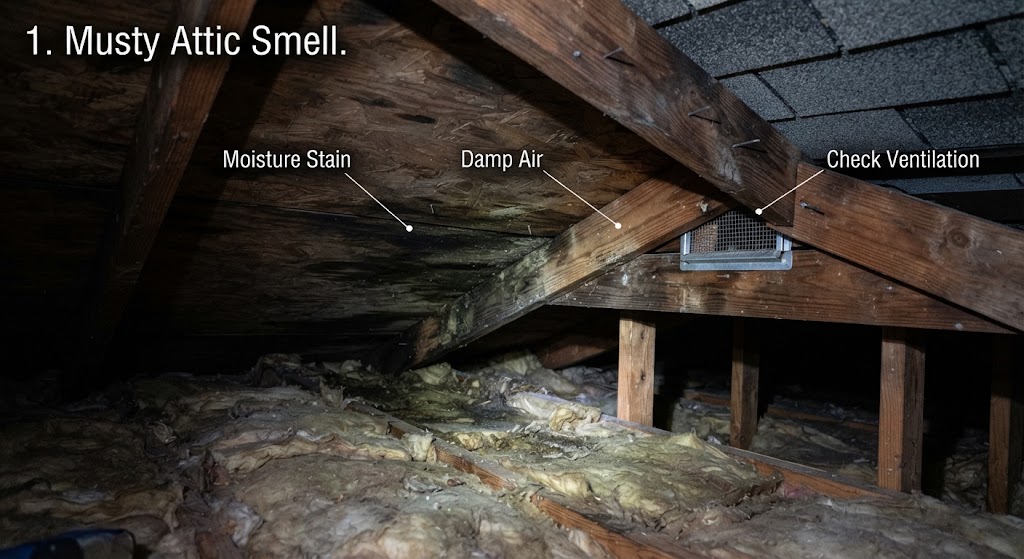
A musty smell is one of the first warning signs of trapped attic moisture. If the attic or upper rooms smell damp, stale, or earthy after humid weather, moisture may not be moving out of the home correctly.
Homeowners may notice:
Musty attic odor: Damp air may be trapped under the roof deck.
Stale smell in upper rooms: Moisture may be affecting nearby spaces.
Odor after rain or humid days: The problem may be tied to weather conditions.
Stronger smell near insulation: Damp insulation can hold moisture and odor.
What this may mean: A musty attic smell can be an early sign of Gulf Coast humidity roof damage, poor ventilation, or hidden moisture buildup.
Limitation Note: A musty smell does not always mean the roof is leaking. Ventilation, insulation, indoor humidity, HVAC ducts, or condensation may also be involved.
2. Dark Stains on Roof Decking
Roof decking is the wood layer under the shingles. When humid air gets trapped in the attic, dark staining may appear on the underside of the decking. This can happen from condensation, slow leaks, or repeated moisture exposure.
Warning signs may include:
Dark streaks on wood decking: Moisture may be collecting under the roof.
Patchy discoloration: Some roof sections may hold more moisture than others.
Stains near vents or valleys: Moisture may be entering or collecting in weak areas.
Soft-looking wood areas: Long-term moisture can weaken decking.
What this may mean: Dark roof decking stains may point to trapped attic moisture, poor ventilation, or a roof leak that needs inspection.
Limitation Note: Staining alone does not confirm the cause. A professional inspection can help determine whether the moisture is from humidity, condensation, ventilation issues, or roof water intrusion.
3. Damp or Compressed Insulation
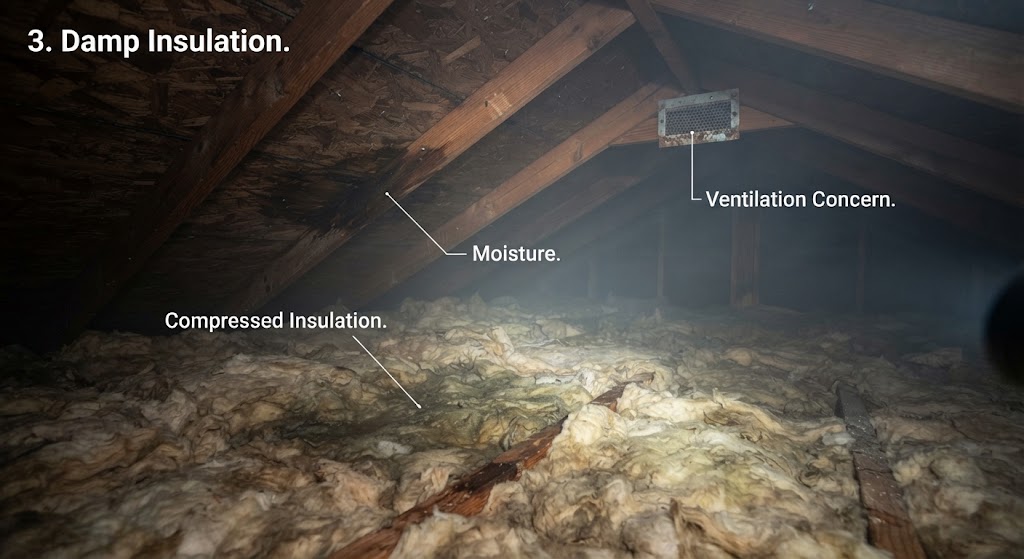
Insulation helps control temperature, but it can also show signs of moisture problems. When insulation becomes damp or compressed, it may not perform properly and may hold moisture longer than expected.
Homeowners should watch for:
Damp insulation: Moisture may be entering or collecting in the attic.
Flattened insulation: Moisture can reduce insulation performance.
Dark or stained insulation: This may suggest past moisture exposure.
Uneven attic temperatures: Moisture and ventilation issues may affect comfort.
What this may mean: Damp insulation can be connected to Gulf Coast humidity roof damage, roof leaks, condensation, or poor airflow.
Limitation Note: Insulation problems should be evaluated carefully because moisture may come from the roof, attic ventilation, HVAC ducts, bathroom fans, or indoor humidity.
4. Mold-Like Growth or Mildew Concerns
Humidity and trapped moisture can create conditions where mold-like growth or mildew concerns become more likely. This can appear on wood decking, rafters, insulation, or other attic surfaces.
Possible warning signs include:
Dark speckled areas: These may appear on roof decking or framing.
Musty smell: Odor may become stronger in humid weather.
Moisture stains: Staining may appear near roof penetrations or decking.
Poor airflow: Trapped air can allow moisture to stay longer.
What this may mean: Mold-like attic growth can be a sign that moisture is not drying properly and the roof system needs a closer look.
Limitation Note: A roofing inspection can identify moisture and roof-related concerns, but confirmed mold identification or remediation may require a qualified mold professional.
5. Rusted Nails, Fasteners, or Metal Components
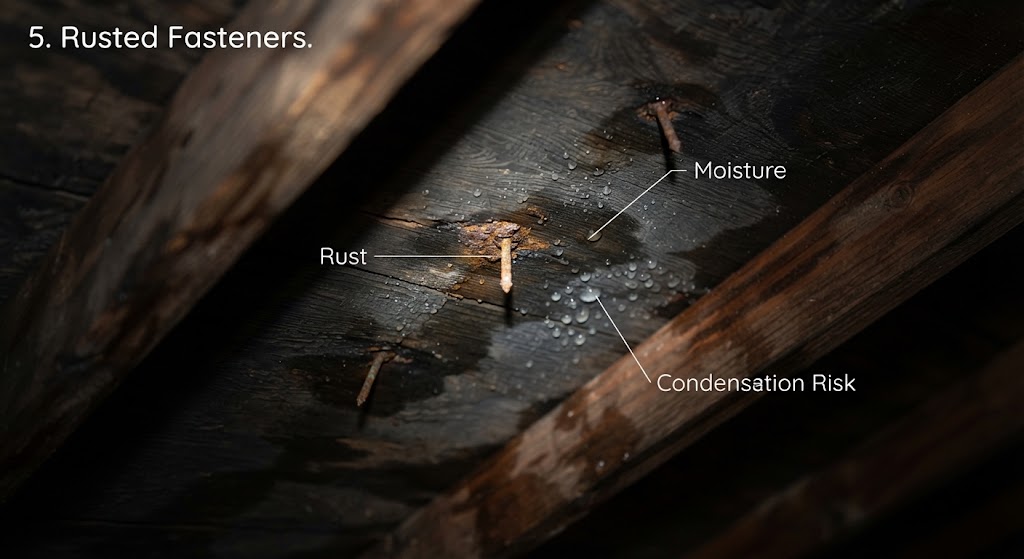
Rust on roofing nails, fasteners, vent hardware, or metal attic components may point to moisture in the attic. In humid Gulf Coast homes, condensation can collect on cooler metal surfaces when airflow is poor.
Homeowners may notice:
Rust on nail tips: Moisture may be forming under the roof deck.
Rusted vent hardware: Metal components may be exposed to damp air.
Condensation marks: Moisture may form during temperature changes.
Stains below fasteners: Rust or moisture may leave visible marks.
What this may mean: Rusted attic fasteners can be a small clue that attic moisture is affecting parts of the roof system.
Limitation Note: Surface rust does not always mean the roof is failing, but it should be checked with the rest of the attic and roof ventilation system.
6. Uneven Shingle Wear From Poor Ventilation
Attic ventilation helps release heat and moisture. When ventilation is poor, heat and humidity may stay trapped below the roof deck. This can affect shingles from underneath and contribute to uneven wear.
Exterior signs may include:
Premature shingle aging: Shingles may wear faster than expected.
Patchy roof color: Uneven wear may point to heat or moisture concerns.
Curling shingles: Trapped heat can stress asphalt shingles.
Granule loss: Shingles may lose protection as they age.
What this may mean: Poor ventilation can contribute to Gulf Coast humidity roof damage by trapping heat and moisture under the roof surface.
Limitation Note: Shingle wear can also come from age, storm damage, installation issues, sun exposure, or material condition. The full roof should be inspected before deciding on repair or replacement.
7. Ceiling Stains or Interior Moisture After Humid Weather
Some homeowners notice stains after rain, storms, or long periods of humid weather. These stains may come from a roof leak, condensation, attic moisture, or ventilation problems.
Interior warning signs include:
Brown or yellow ceiling stains: These may suggest water intrusion.
Moisture near vents or light fixtures: Condensation or leaks may be involved.
Peeling paint: Moisture may be affecting interior finishes.
Recurring stains: The source may not have been corrected.
What this may mean: Interior staining can be a sign that attic moisture or roof water intrusion is already affecting the living space.
Limitation Note: Ceiling stains should not be diagnosed by appearance alone. Plumbing, HVAC, condensation, or roof leaks may all create similar signs.
8. Bathroom Fans or Dryer Vents Releasing Moist Air Into the Attic
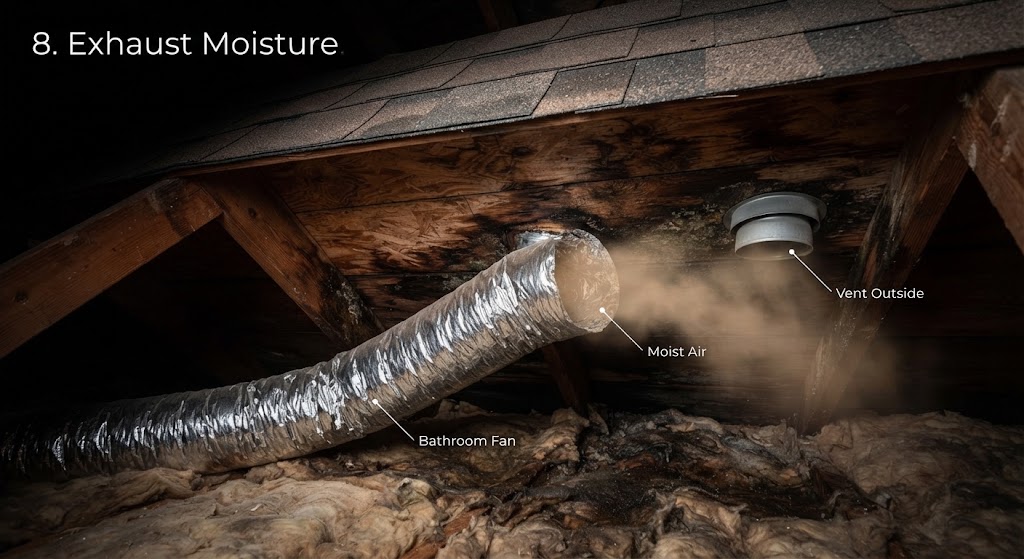
Not all attic moisture starts outside. Sometimes moist indoor air is being pushed into the attic by bathroom fans, dryer vents, kitchen exhaust, or poorly connected ducts. In a humid Gulf Coast climate, this can make moisture problems worse.
Warning signs may include:
Exhaust ducts ending in the attic: Moist air should be vented outside.
Condensation near ductwork: Warm moist air may be cooling in the attic.
Musty smell near ducts: Moisture may be trapped in insulation or wood.
Stains near vent openings: Moisture may be collecting nearby.
What this may mean: Even if the roof surface is not leaking, indoor moisture can still create attic conditions that contribute to roof damage.
Limitation Note: Duct and ventilation issues may require coordination between roofing, HVAC, or home repair professionals depending on the source.
What Gulf Coast Homeowners Can Check Safely
Homeowners should avoid climbing onto the roof or walking through unsafe attic areas. A safe visual check can still reveal helpful clues.
Look for musty smells in the attic or upper rooms.
Check for dark stains on visible roof decking.
Look for damp or compressed insulation.
Watch for rusted nail tips or metal attic components.
Check for ceiling stains or peeling paint.
Look for blocked soffit vents or poor airflow clues.
Check whether bathroom fans vent outside, not into the attic.
If several signs are present, a professional inspection is the safest next step.
Mississippi Gulf Coast Roofing Concerns
This topic is especially relevant for homeowners in Gulfport, Biloxi, Ocean Springs, Pascagoula, Bay St. Louis, Long Beach, Pass Christian, D’Iberville, and nearby Mississippi Gulf Coast communities.
Homes in this region deal with humidity, storms, heavy rain, wind, heat, and seasonal moisture. These conditions can make attic ventilation and moisture control especially important for roof performance.
When to Schedule a Roof and Attic Moisture Inspection
You should schedule an inspection if you notice musty attic odors, dark decking stains, damp insulation, rusted fasteners, ceiling stains, mold-like growth, poor ventilation signs, or uneven shingle wear.
Pro-Shield Roofing & Construction helps Mississippi homeowners with roof inspections, roof repairs, roof leak repair, roof replacements, metal roofing, storm damage concerns, and roofing services across Central MS and the Gulf Coast. If you are concerned about Gulf Coast humidity roof damage, an inspection can help determine whether the issue is related to ventilation, moisture, roof leaks, or aging materials.
Contact Pro-Shield Roofing & Construction to schedule an inspection.
Helpful External Resources for Homeowners
For additional homeowner education, review these trusted third-party resources:
EPA mold and moisture information
Energy.gov ventilation guidance
National Weather Service thunderstorm safety guidance
Ready.gov severe weather preparedness
Limitation Note: General moisture and ventilation resources can help homeowners understand attic concerns, but they cannot diagnose one specific roof or attic condition.
FAQ: Gulf Coast Humidity Roof Damage and Attic Moisture
Can Gulf Coast humidity damage my roof?
Yes. Gulf Coast humidity can contribute to roof damage when moisture becomes trapped in the attic and affects roof decking, insulation, fasteners, ventilation, or shingle performance.
What are signs of trapped attic moisture?
Signs may include musty attic smells, dark roof decking stains, damp insulation, rusted nail tips, mold-like growth, ceiling stains, poor airflow, and uneven shingle wear.
Does attic moisture always mean the roof is leaking?
No. Attic moisture may come from roof leaks, poor ventilation, condensation, indoor humidity, bathroom fans, dryer vents, or HVAC duct issues.
Can poor attic ventilation shorten roof life?
Yes. Poor ventilation can trap heat and moisture under the roof deck, which may contribute to shingle wear, decking concerns, and moisture problems over time.
When should I schedule a Gulf Coast roof inspection?
You should schedule an inspection if you notice musty odors, attic stains, damp insulation, rusted fasteners, ceiling stains, mold-like growth, or signs of roof wear after humid weather or storms.
Conclusion
Gulf Coast humidity roof damage can happen quietly from the inside out. Trapped attic moisture, poor ventilation, damp insulation, dark decking stains, rusted fasteners, and musty odors can all point to roof concerns that should not be ignored.
Not every attic moisture issue means the roof needs replacement, but every warning sign deserves attention. A professional roof and attic inspection can help homeowners understand whether the problem is caused by humidity, ventilation, condensation, roof leaks, storm damage, or aging materials.
If you are worried that Gulf Coast humidity is affecting your roof, contact Pro-Shield Roofing & Construction to schedule an inspection and protect your home before small moisture problems become bigger repairs.