Along the Mississippi Gulf Coast, tropical weather can change quickly. A storm that seems far away can bring heavy rain, strong wind, flying debris, and wind-driven moisture to Gulfport with little time to react. That is why scheduling a roof inspection before the next tropical storm is one of the smartest ways to reduce avoidable roof problems.
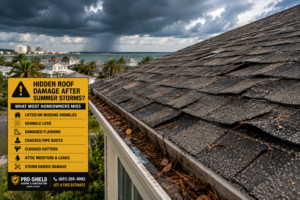
A roof does not need to be old to have storm vulnerabilities. Missing shingles, lifted edges, cracked pipe boots, clogged gutters, loose flashing, damaged vents, weak sealants, and attic moisture can all become serious concerns when tropical rain starts pushing against the home.
The goal of a pre-storm roof inspection is not to guarantee that a roof can withstand every tropical system. No roofing system can stop every storm-related risk. The goal is to identify weak points early, correct manageable problems, document roof condition, and help homeowners understand what needs attention before severe weather arrives.
Why Should Gulfport Homeowners Inspect the Roof Before a Tropical Storm?
Before a tropical storm reaches the Gulf Coast, Gulfport homeowners should schedule a roof inspection because wind, rain, and debris can quickly expose existing roof problems. An inspection can identify missing shingles, lifted shingles, loose flashing, cracked pipe boots, clogged gutters, damaged vents, attic moisture, and previous storm damage before those issues become leaks or water damage during severe weather.
Gulfport Roofs Face More Than Normal Rain
Homes in Gulfport and nearby Gulf Coast communities deal with a weather pattern that can be especially hard on roofing systems. Tropical storms bring a combination of wind, moisture, pressure changes, debris impact, and heavy rainfall. That combination can test weak points that may not leak during an ordinary rain shower.
During a tropical storm, water may not fall straight down. Wind can push rain sideways, underneath lifted shingles, around flashing, through damaged vents, and into small gaps near roof penetrations. If the roof already has a vulnerable area, storm conditions can make the problem worse quickly.
This is why a roof that “looked fine” before the storm can still develop leaks afterward.
Small Roof Problems Can Become Big Storm Problems
Many roof problems start small. A slightly lifted shingle, a cracked pipe boot, or a clogged gutter may not seem urgent during dry weather. But once heavy tropical rain arrives, small issues can become water entry points.
Lifted shingles: Wind can push rain beneath shingles that are no longer sealed properly.
Loose flashing: Gaps around chimneys, walls, valleys, or roof transitions can allow water intrusion.
Cracked pipe boots: Rubber boots around plumbing vents can split and create leak paths into the attic.
Clogged gutters: Blocked drainage can force water to back up near roof edges, fascia, soffits, and siding.
Damaged vents: Loose or dented vents can allow wind-driven rain to enter attic areas.
A pre-storm inspection helps find these problems while there is still time to plan repairs.
1. Shingles Should Be Checked Before Wind Arrives
Shingles are the roof’s first visible layer of protection. Before tropical weather reaches the Gulf Coast, homeowners should make sure shingles are not missing, loose, cracked, curled, or lifted.
Even one vulnerable area can create a problem during high wind and heavy rain. Wind can lift shingle tabs, break seals, and allow rain to reach the layers beneath the roof surface.
Missing shingles: Missing shingles expose the roof system and may allow water to reach underlayment or decking.
Lifted shingles: Raised shingle edges can become entry points for wind-driven rain.
Curling shingles: Curling may suggest age, heat exposure, or loss of flexibility.
Cracked shingles: Cracks can weaken the shingle surface and increase leak risk.
Patchy roof areas: Areas that look different may indicate past repairs, uneven wear, or previous storm damage.
Homeowners should avoid climbing onto the roof. A professional inspection can safely evaluate shingle condition and determine whether visible concerns are isolated or more widespread.
2. Gutters and Downspouts Matter During Tropical Rain
Gutters are not just an exterior detail. They are part of the roof drainage system. During tropical storms, a roof may need to move a large volume of water quickly. If gutters are clogged or sagging, water may overflow or back up near roof edges.
In Gulfport, gutters may collect leaves, pine needles, shingle granules, roof debris, and branches before storm season. If that debris is already present, heavy rain can overwhelm the system faster.
Clogged gutters: Leaves, pine needles, and storm debris can block water flow during heavy rain.
Sagging gutters: Gutters pulling away from the fascia may not drain properly.
Loose downspouts: Downspouts should be secure and direct water away from the home.
Overflow stains: Staining below gutters may show that water has spilled over repeatedly.
Granules in gutters: Dark, sandy material may indicate shingle wear, hail impact, or storm-related granule loss.
Clean, secure gutters can help reduce water backup and drainage problems during tropical weather.
3. Flashing Is a Common Leak Point During Wind-Driven Rain
Flashing protects roof areas where water is more likely to enter. These areas include chimneys, valleys, walls, skylights, roof edges, and other transitions. During tropical storms, flashing is especially important because wind can push rain into vulnerable gaps.
Loose, cracked, bent, rusted, or poorly sealed flashing can allow water to travel into the roof system before a homeowner notices a ceiling stain.
Chimney flashing: Loose flashing around a chimney can allow water into nearby roof decking or attic areas.
Valley flashing: Valleys carry large amounts of water and can leak if damaged or blocked by debris.
Wall flashing: Roof-to-wall transitions need proper flashing to move water away from the structure.
Skylight flashing: Skylights can leak when flashing, seals, or surrounding shingles fail.
Drip edge areas: Roof edges should be checked for water movement, corrosion, and secure attachment.
Flashing problems are not always obvious from the ground, which makes inspection important before tropical storm conditions arrive.
4. Pipe Boots and Roof Vents Should Not Be Overlooked
Some of the most common roof leaks begin around small roof components. Pipe boots, roof vents, exhaust caps, and other roof penetrations may fail from heat, UV exposure, wind, age, or previous storm damage.
During a tropical storm, these small components can become major water entry points.
Pipe boots: Rubber boots can crack, split, or pull away from plumbing vent pipes.
Roof vents: Loose or damaged vents may allow wind-driven rain into the attic.
Exhaust caps: Damaged caps can create openings for water, debris, or pests.
Old sealants: Sealants that are dry, cracked, or separated may fail under storm pressure.
A roof inspection should include these details because they are easy for homeowners to miss but can cause expensive water damage.
5. Attic Moisture Can Reveal Hidden Roof Problems
The attic can show signs of roof trouble before water reaches the living space. If a roof has small leaks, poor ventilation, or hidden storm damage, the attic may reveal clues.
Before a tropical storm, attic signs should not be ignored. Moisture that is already present may become worse during heavy wind-driven rain.
Damp insulation: Wet or compressed insulation may indicate water entry through the roof.
Dark roof decking stains: Stains on the underside of roof decking can show where moisture has traveled.
Rust on nails: Rust may suggest repeated moisture exposure or condensation concerns.
Musty odors: A musty smell can point to trapped moisture or poor ventilation.
Daylight through roof boards: Visible daylight may indicate gaps, missing materials, or roof movement.
If attic moisture is already visible, the roof should be evaluated before the next major storm.
6. Tree Branches and Debris Can Cause Storm Damage
Gulfport homes often have nearby trees that provide shade and curb appeal. Before a tropical storm, those same trees can create roof risks. Branches can scrape shingles, drop leaves into gutters, or break during high wind.
Tree-related damage may include direct impact damage, clogged drainage, granule loss, damaged gutters, and debris buildup in roof valleys.
Branches touching shingles: Repeated contact can wear down shingle surfaces and remove protective granules.
Heavy limbs above the roof: Large limbs can break during wind and cause direct roof damage.
Leaves in valleys: Leaf buildup can slow water drainage during heavy rain.
Debris in gutters: Branches, leaves, and pine needles can block water flow before the storm begins.
Homeowners should handle tree trimming and debris removal before storms are close, not during last-minute storm preparation.
7. Previous Storm Damage Should Be Reviewed
A roof may already have damage from past storms. Wind, hail, heavy rain, and debris impact can create problems that stay hidden until the next tropical system exposes them.
Before the next storm, Gulfport homeowners should review the roof’s history. Past leaks, emergency patches, insurance claims, shingle repairs, or uninspected storms may all matter.
Past leaks: A previous leak may reveal a weak area that needs another look before storm season.
Temporary repairs: Old patches may not hold up during tropical wind and rain.
Uninspected storm exposure: Roofs that have been through severe weather without inspection may have hidden damage.
Repeated repairs: Multiple repairs may suggest a broader roof system issue.
A pre-storm inspection can show whether older damage still affects roof performance.
8. Roof Documentation Helps After a Storm
One practical reason to schedule a roof inspection before the next tropical storm is documentation. Knowing the roof’s condition before severe weather can help homeowners compare what changed afterward.
Homeowners can also take their own ground-level photos before a storm arrives.
Exterior photos: Photos of roof slopes, gutters, downspouts, vents, and visible damage can document current condition.
Interior photos: Photos of ceilings, attic areas, and any existing stains can help track changes after storms.
Repair records: Keeping invoices, warranties, inspection reports, and claim documents together can help after severe weather.
Storm date notes: Writing down dates of major wind, rain, or hail events can help connect damage to weather history.
Documentation does not prevent damage, but it can make the post-storm process clearer.
What Homeowners Can Check Safely Before a Tropical Storm
Homeowners should not climb onto the roof. Roof surfaces can be steep, slippery, brittle, or already damaged. Instead, use safe ground-level and interior checks.
Walk around the home: Look for missing shingles, lifted edges, debris, gutter sagging, or visible roof damage.
Check gutters from the ground: Look for overflowing sections, clogs, loose downspouts, or granules near downspout exits.
Inspect ceilings: Look for stains, bubbling paint, soft drywall, or discoloration near roof slopes.
Check the attic if safe: Look for damp insulation, dark decking stains, musty odors, or daylight through roof boards.
Document visible issues: Take photos of roof concerns, branches, debris, or drainage problems before the storm.
If any of these warning signs appear, homeowners should schedule a professional roof inspection before severe weather arrives when possible.
When Roof Repair Before a Storm May Be Necessary
Not every roof concern requires major repair before a tropical storm, but some issues should be addressed quickly. Small repairs may help reduce the chance of water entering the home during heavy rain.
Pre-storm repair may be important if the inspection finds:
Missing shingles: Exposed roof areas may need attention before wind-driven rain arrives.
Cracked pipe boots: Split rubber around plumbing vents can become an active leak point.
Loose flashing: Gaps around transitions can allow water into the roof system.
Damaged vents: Loose vents may allow rain into the attic during high wind.
Clogged gutters: Blocked gutters should be cleared to improve drainage before heavy rainfall.
The best approach depends on roof condition, storm timing, safety, and the severity of the issue.
What Not to Do When a Tropical Storm Is Approaching
Some last-minute actions can create more risk than protection. When a tropical storm is approaching, safety should come first.
Do not climb onto the roof: Roof surfaces can be dangerous even before severe weather begins.
Do not attempt major repairs during storm warnings: Contractors should not perform repairs when conditions are unsafe.
Do not pressure wash shingles: Pressure washing can remove protective granules and damage roofing materials.
Do not ignore active leaks: Small leaks can become worse during tropical rain and should be documented and addressed safely.
Do not wait until the last minute: Contractors may be booked, materials may be limited, and safe repair windows may close quickly.
Helpful Tropical Storm Preparedness Resources
Homeowners can review the National Hurricane Center for tropical weather forecasts, storm advisories, and hurricane tracking information.
The Ready.gov hurricane preparedness guide provides guidance on hurricane planning, emergency supplies, evacuation preparation, and home safety steps.
NOAA also provides hurricane preparedness resources to help homeowners understand risks before tropical weather develops.
Mississippi Gulf Coast homeowners can also follow local emergency management and weather resources for evacuation notices, storm updates, and preparedness guidance.
Roofing Resources and Local Support
Educational roofing resources can help Gulf Coast homeowners understand roof inspections, storm preparation, roof repair, replacement planning, and exterior protection before severe weather arrives.
Pro-Shield Roofing & Construction is a licensed and insured roofing contractor serving Madison, Ridgeland, Gulf Coast MS, Hattiesburg, Central Mississippi, and surrounding areas. Pro-Shield Roofing & Construction provides roof inspections, roof repairs, roof installations, roof replacement, reroofing, gutter installation, siding services, and exterior repair support for residential and commercial property owners.
Homeowners can call (601) 265-4992 or request a free estimate when they need help evaluating roof condition before or after tropical weather.
Pro-Shield Roofing & Construction is family-owned and operated, licensed and insured, and works with roofing manufacturers including Atlas Shingles, GAF, and CertainTeed. The company also specializes in durable metal roofing systems and exterior improvements. License #: No. R18290.
Trusted Roofing Partners for Homeowner Education
Homeowners in other service areas may also benefit from trusted roofing partners who provide roof inspections, roof repair, roof replacement, storm restoration, and exterior service support.
Ridgeline Roofing & Restoration serves Birmingham/Hoover, Huntsville, Odenville, Nashville, Atlanta, Marietta, and nearby Southeast service areas. Ridgeline is a trusted roofing partner for inspections, storm restoration, roof repair, and roof replacement support.
Brody Allen Exterior serves Missouri and Illinois service areas, including Lake St. Louis, O’Fallon, and Springfield markets. Brody Allen Exterior helps homeowners and property owners with inspections, repairs, storm damage, roof replacement planning, and exterior service needs.
Signature Exterior Inc. serves Charlotte, North Carolina and Greenville, South Carolina. Signature Exterior Inc. provides commercial and residential roofing services for homeowners and businesses in those markets.
Conclusion
Gulfport homeowners should schedule a roof inspection before the next tropical storm because small roof problems can become serious during Gulf Coast weather. Missing shingles, lifted edges, clogged gutters, loose flashing, cracked pipe boots, damaged vents, attic moisture, and previous storm damage can all create water intrusion risks.
A pre-storm roof inspection gives homeowners a clearer understanding of roof condition before severe weather arrives. It can help identify repair needs, improve drainage, document current conditions, and reduce preventable storm-related problems.
No roof can stop every tropical storm-related risk, but checking the right areas early can help homeowners prepare with more confidence. If you need a professional Gulfport roof inspection, schedule one before the next tropical system moves through the Mississippi Gulf Coast.
FAQ
When should Gulfport homeowners schedule a roof inspection?
The best time to schedule a roof inspection is before tropical storm activity increases, after major storms, or whenever missing shingles, gutter problems, leaks, attic moisture, or visible roof damage appear.
Can a tropical storm damage a roof even if it is not a hurricane?
Yes. Tropical storms can bring strong wind, heavy rain, flying debris, and wind-driven moisture that may damage shingles, flashing, vents, gutters, and roof penetrations.
What roof problems should be checked before a tropical storm?
Important areas include shingles, flashing, pipe boots, roof vents, gutters, downspouts, attic moisture, roof valleys, tree branches, and previous storm damage.
Should homeowners climb onto the roof before a storm?
No. Homeowners should avoid climbing onto the roof. Roof surfaces can be steep, slippery, brittle, or damaged. Ground-level checks and professional inspections are safer.
Who can Gulfport homeowners call for roof inspection help?
Gulfport homeowners can call Pro-Shield Roofing & Construction at (601) 265-4992 or request a free estimate for roof inspection, repair, replacement, gutter, siding, and exterior service needs.